
 English
Lead time is the number that quietly decides whether an OEM launch succeeds. Promise your customers a date, and the factory's lead time is the number you're promising on. Get it wrong and the whole project slips — not because anything failed, but because nobody planned for how long each step actually takes.
Here's what actually drives OEM lead time, and how to plan around it instead of being surprised by it.
What's actually in the lead time
OEM lead time isn't one number — it's a stack of steps, each with its own duration:
Sample and approval. Before the production run, there's the sample stage — prototype, validation, your approval. This can run a few weeks on its own, and it's the stage most first-time buyers forget to count.
Materials. Once approved, the factory orders materials. The LCD panel, touch frame and other components have their own procurement lead times.
Production. The actual assembly and testing on the line. This is the shortest part of the whole stack on a healthy line, but it's the part people usually mean when they quote "lead time."
Customization steps. Logo branding adds a little; software and firmware customization add more; full ODM with tooling adds the most. Each level of customization adds its own increment.
Quality and inspection. Testing and the pre-shipment inspection sit on top, before the goods leave.
How customization changes the timeline
The single biggest variable in OEM lead time is how far you customize. The four levels we cover in our customization guide each add a different increment:
Logo branding barely moves the needle — the panel is essentially stock, with a branding step added.
Packaging and manuals add lead time for design and printing, but it's still measured in days.
Software customization is where it starts to stretch, because firmware changes need development, testing and re-testing before production.
Full ODM is the longest, because you're adding engineering, tooling and a first-article build before the production run even starts.
The practical lesson: if you need a launch date, decide the customization level early, because that's the lever that moves lead time the most.

Why the factory's own lines matter for lead time
Here's a part that's easy to miss: a factory's lead time is only as real as its own production capacity.
A factory that runs its own production lines can schedule your order into a known capacity and commit to a real date. A trading company that relies on a subcontractor is quoting a date it doesn't control — and when the subcontractor is busy, your order waits. The same logic applies to components: a factory that makes its own sheet-metal parts and LCD modules isn't waiting on a supplier's schedule the way an assembler is.
We cover the manufacturing side of this in our OEM manufacturing guide.
How to plan around lead time instead of fighting it
A few habits turn lead time from a source of surprises into something you can plan against:
1. Lock the customization level early. It's the biggest lever on the timeline.
2. Start the sample stage immediately. It runs before production and catches problems while they're cheap.
3. Confirm capacity, not just a date. Ask the factory about its own lines, not a subcontractor's.
4. Build in buffer for inspection and shipping. The number on the quote isn't the number to your customer's door.
5. Order the pilot batch early. A small first batch proves the timeline before you commit to the full run — the same logic as our sample process guide.
How Lonton handles OEM lead time
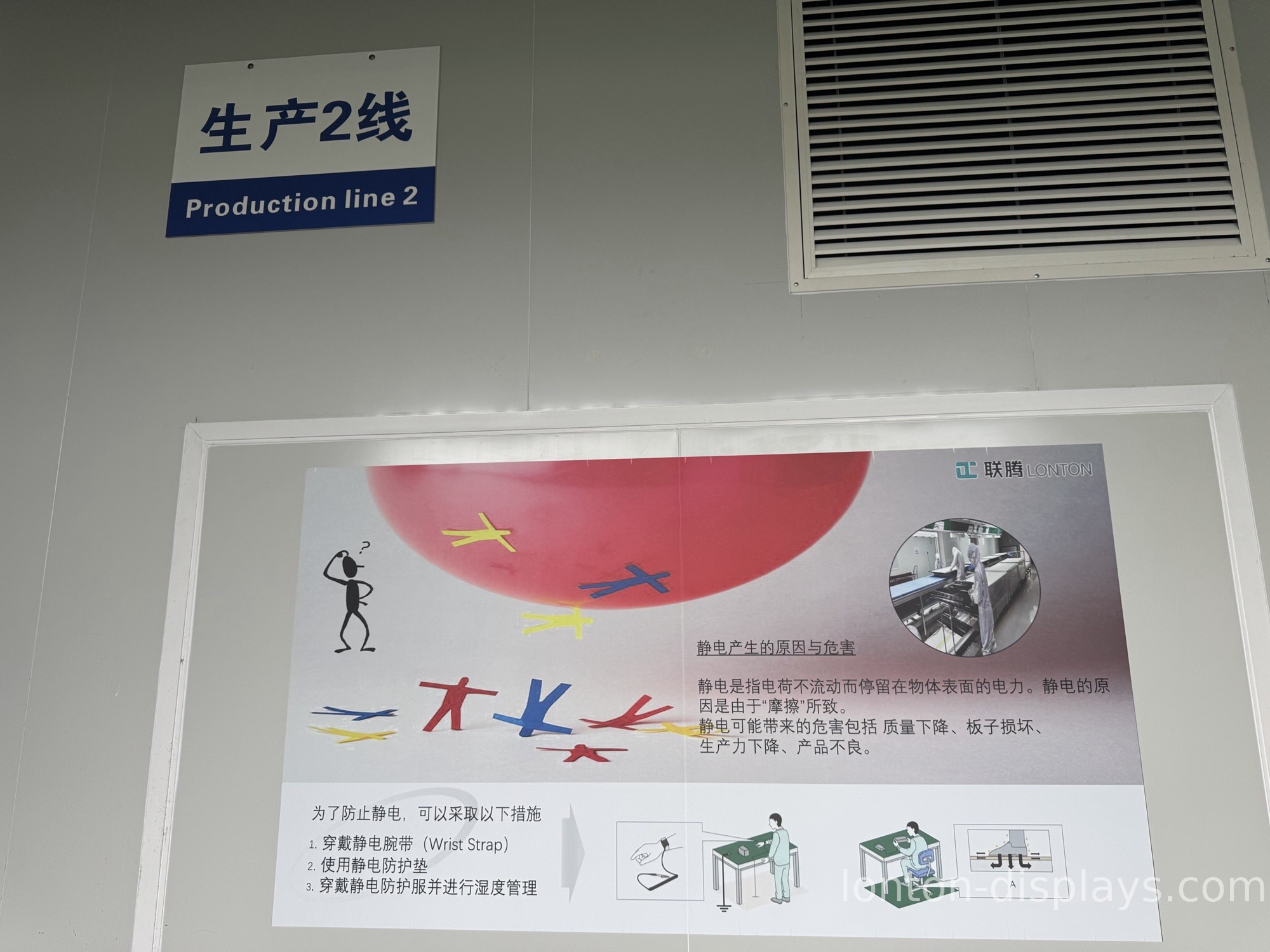
Lonton has been manufacturing interactive flat panels since 2005, and the lead time is real because the capacity is ours. We run 15 production lines of our own, along with our own sheet-metal fabrication and LCD module workshop, so an OEM order is scheduled into capacity we control rather than a subcontractor's calendar.
For a standard OEM order, production lead time typically runs 15 to 25 days depending on the customization level, and the flexible MOQ of 5 units means you can run a pilot batch and validate the timeline before committing to volume.
If you're planning an OEM order against a launch date, contact us and we'll map the full timeline for your spec. You can also browse the interactive flat panel range.
Frequently Asked Questions
How long does an OEM interactive flat panel take?
It stacks up — sample and approval, materials, production, customization and inspection. A standard OEM order typically runs 15 to 25 days of production time, not counting the sample stage.
What adds the most lead time to an OEM order?
Customization level. Logo branding adds little; software customization stretches it; full ODM with tooling adds the most. Decide the level early.
Why does the factory's own production matter for lead time?
A factory with its own lines can commit to a real date from capacity it controls. A trading company quoting a subcontractor's schedule can't make the same promise.
What is a pilot order and how does it affect lead time?
A small first batch that proves the timeline and quality before the full run. It adds a step but catches problems while they're cheap.
Can I shorten OEM lead time?
Lock the customization level early, start samples immediately, confirm the factory's own capacity, and run a pilot batch before committing to volume.