
 English
When you OEM a product, you're putting your brand on something someone else builds. That's a lot of trust to hand over on a handshake, and the way you earn it back is by understanding the factory's quality control — not by hoping.
Quality control in OEM isn't one thing, it's a chain of checks that runs from the incoming materials to the moment the container ships. Miss a link and the problem lands on your brand, not the factory's. Here's what the chain should look like.
The quality control chain, link by link
A serious factory runs quality checks at every stage, not just at the end:
Incoming materials. The LCD panel, the touch frame, the power supply — every part is checked when it arrives. A factory that trusts its suppliers without checking is inheriting their defects.
In-process checks. During assembly, the line checks each unit as it's built — touch calibration, backlight uniformity, port function — rather than waiting to test at the end.
Reliability testing. Samples are stress-tested — powered on continuously, temperature-cycled, run under load — to catch the failures that only show up after weeks of use.
Pre-shipment inspection. Before the container leaves, a final check confirms the batch matches the approved sample and the spec.
The key distinction is between a factory that tests everything and one that tests a sample. The first catches problems; the second catches up with you.
The numbers that reveal a factory's real quality
When you're auditing a factory, ask for numbers, not adjectives. "We care about quality" means nothing. These do:
First-pass yield — the percentage of units that pass on the first test without rework. A high number means the process is stable; a low number means the factory is fixing problems it should be preventing.
Quality pass rate — the percentage of shipped units that pass final inspection.
Customer satisfaction or return rate — the number that tells you what happens after the unit leaves the factory.
A factory that can quote these from its own production data is running a real quality system. A factory that can't is running on luck.
Why the factory's own manufacturing matters for QC
This is the part that ties quality control back to who builds the product. A factory that makes its own LCD modules and sheet-metal parts controls the quality of the components that most often fail. A factory that assembles bought-in parts is at the mercy of whatever its suppliers shipped that week.
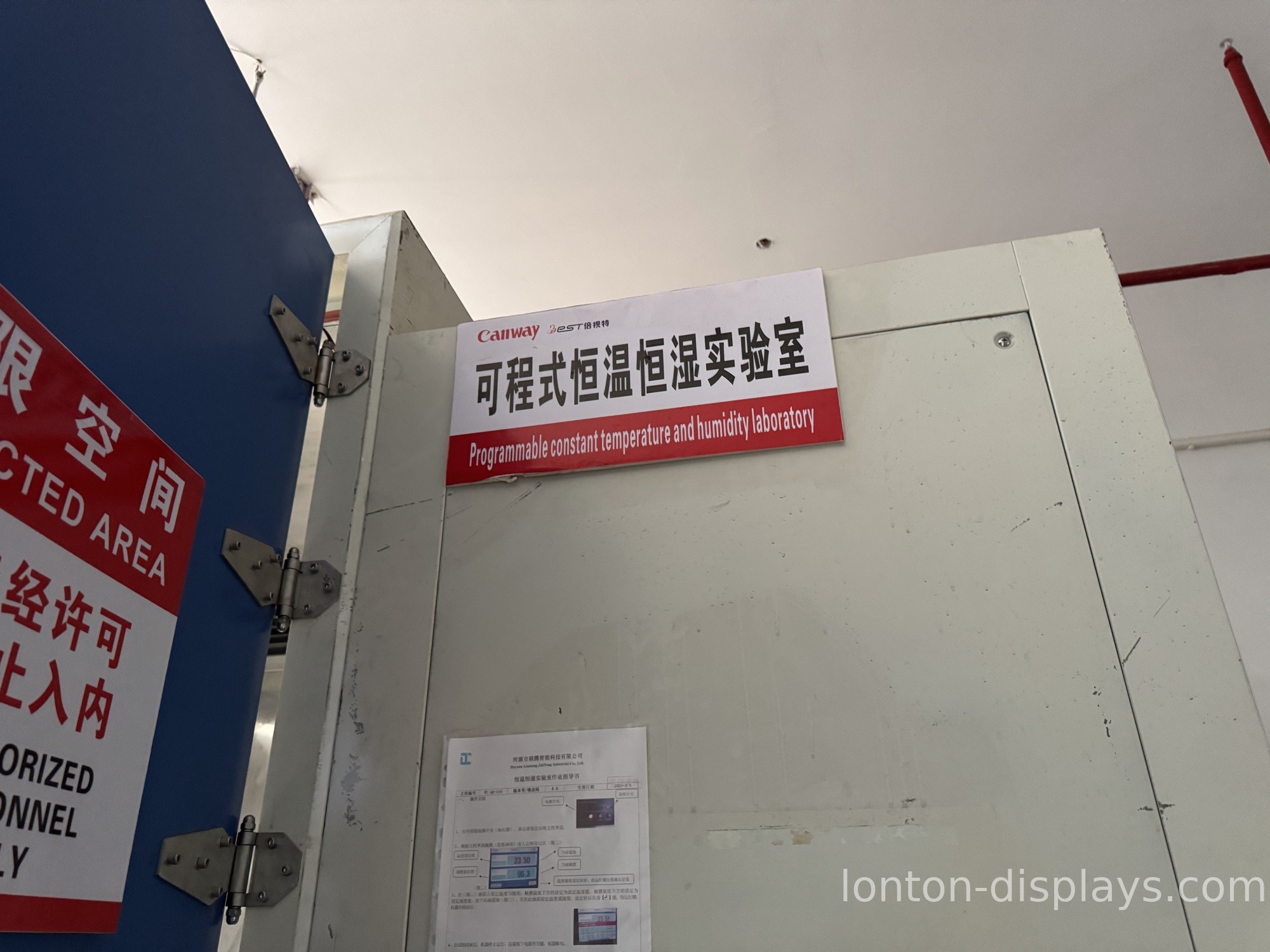
The same logic applies to testing. A factory with its own reliability lab — a room where panels are run continuously, temperature-cycled and loaded until they fail — can catch defects before they ship. A factory without one is testing on the customer's time.
What to check when you audit an OEM factory
When you visit or audit a factory before an OEM project, these are the checks that reveal the most:
1. Incoming inspection — do they check parts when they arrive, or trust the invoice?
2. In-process testing — is every unit tested on the line, or just a sample?
3. Reliability lab — can they show you panels under continuous-operation test?
4. The numbers — ask for first-pass yield and quality pass rate from their production data.
5. Traceability — can they trace a defective unit back to its batch and materials?
How Lonton runs quality control
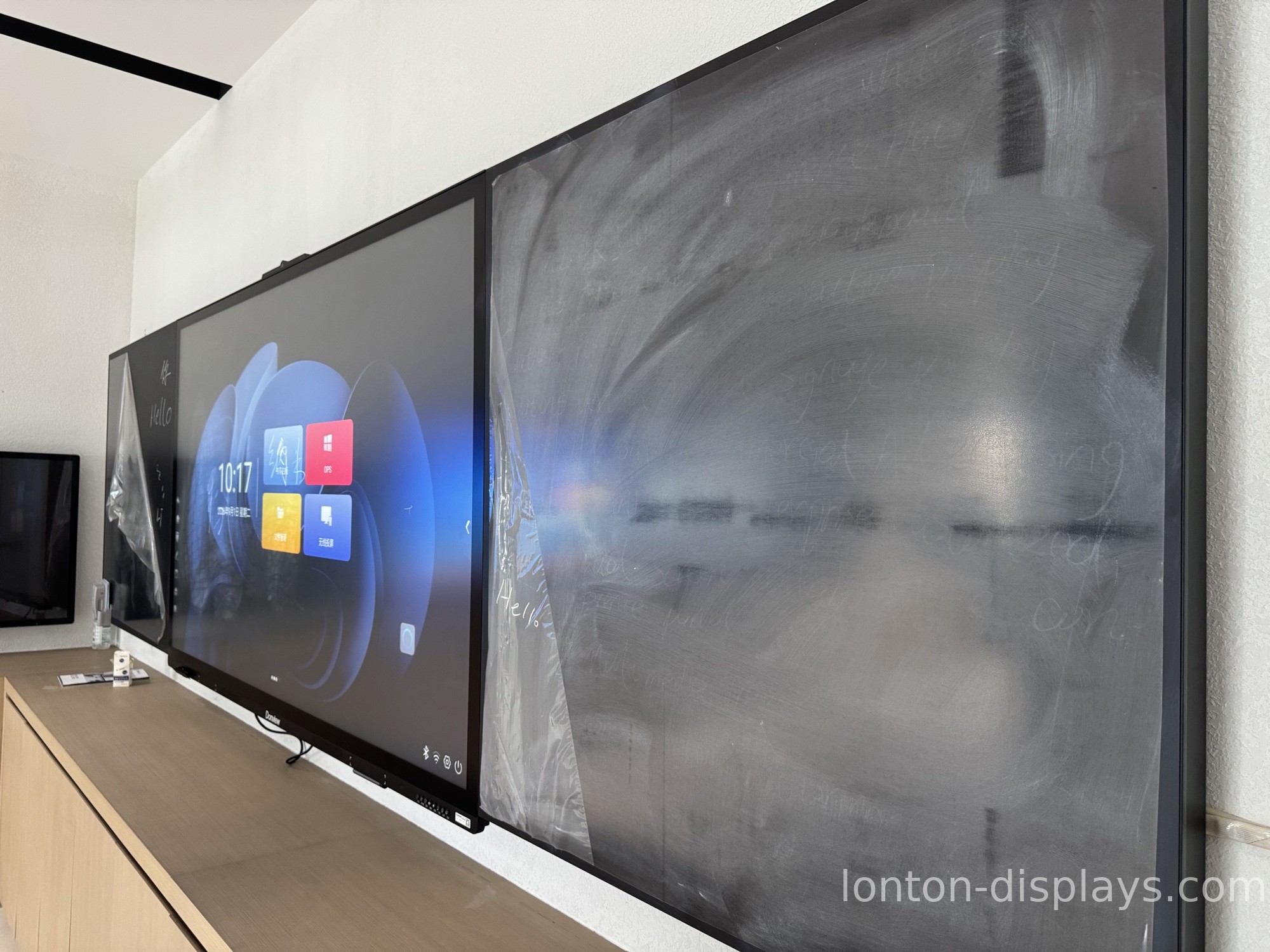
Lonton has been manufacturing interactive flat panels since 2005, and quality control is built into the factory itself rather than bolted on. We run our own LCD module workshop and sheet-metal fabrication, so the components that most often fail are made under our own roof and checked as they're made.
We maintain an ORT reliability lab where panels are stress-tested before they ship, and our production data reflects a 98% first-pass yield and a 99.95% quality pass rate. For a fuller picture of what to look for in a manufacturing partner, see our factory vetting guide.
If you're planning an OEM order and want to see the quality system behind it, contact us and we'll walk you through our process and the numbers. You can also browse the interactive flat panel range.
Frequently Asked Questions
What is quality control in OEM manufacturing?
A chain of checks from incoming materials through in-process testing, reliability testing and pre-shipment inspection — so defects are caught at the source, not on your brand.
What's first-pass yield?
The percentage of units that pass on the first test without rework. A high number means the process is stable; a low number means the factory is fixing problems it should be preventing.
Why does a factory's own manufacturing matter for quality?
A factory that makes its own LCD modules and sheet-metal parts controls the components that most often fail. An assembler of bought-in parts is at the mercy of its suppliers.
What is a reliability lab?
A testing facility where samples are run continuously, temperature-cycled and loaded until they fail — catching the defects that only appear after weeks of use, before the units ship.
What should I check when auditing an OEM factory?
Incoming inspection, in-process testing, the reliability lab, first-pass yield and quality pass rate, and whether a defective unit can be traced back to its batch.