
 English
A trade show booth has seconds to earn a passerby's attention, and most of what's on display is somebody's laptop or a printed banner that everyone else also has. A large interactive display changes that — it's bright, it moves, and it gives people a reason to stop and touch something.
That's the whole point of a trade show display: not to show slides, but to start a conversation. The exhibitors who get this use the screen as a magnet, not as a poster.
How exhibitors use interactive displays
On a show floor, a large interactive display usually does one of a few jobs:
Product demos — the product, spec sheets and videos live on the screen, and a visitor can tap through them.
Interactive catalogs — a touch-driven catalog lets visitors browse the range without a salesperson hovering.
Lead capture — a visitor enters their details or scans a code directly on the display.
Attention-grabbing visuals — motion content on a big bright screen pulls foot traffic from across the aisle.
The common thread is interactivity. A static screen is just a monitor; an interactive one turns a booth into a destination. The difference between the two is the touch layer.
What a trade show environment demands
A trade show floor is its own kind of hard environment, and the display has to survive it:
Multi-user touch. At a busy booth, more than one person touches the screen at once. A 40-point touch surface means two or three visitors can interact at the same time without the panel getting confused.
Rapid setup. Booths go up in hours, often the day before the show. A display that mounts fast, with a matched bracket or a mobile stand, saves the crew real time.
Bright, competing light. Show floors are brightly lit, and every booth is competing for attention. A screen needs brightness to stand out.
Durability in transit. A trade show display gets packed, shipped and rebuilt multiple times a year. The build quality has to survive that cycle.
Why the touch layer makes or breaks a booth display
Here's the detail most buyers skip: the touch technology on the panel decides whether the display actually works as a booth magnet.
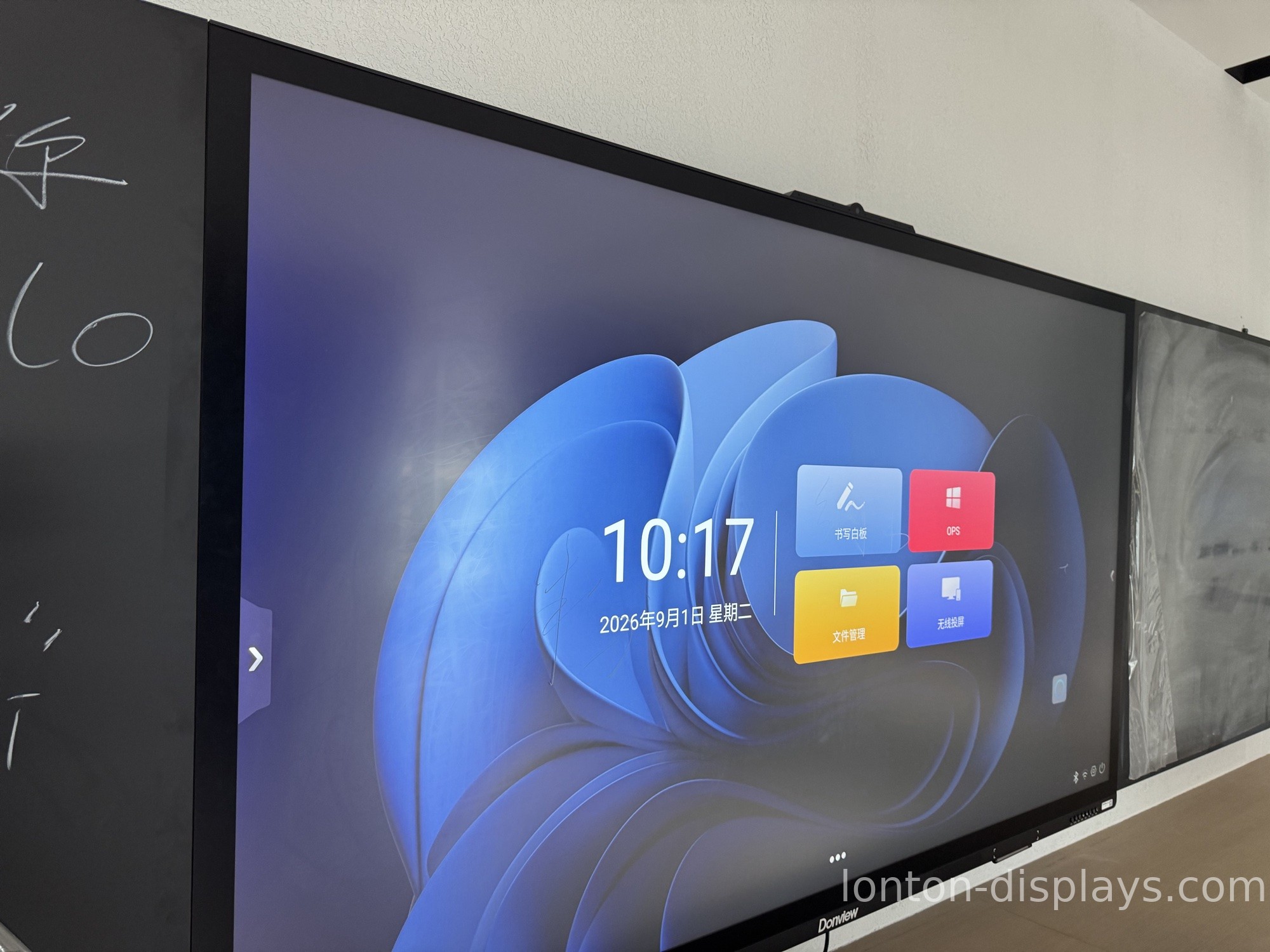
Infrared touch — the standard on large interactive panels — registers multiple simultaneous touches and works with gloved or stylus input, which is exactly what a busy trade show booth needs. It also handles the wear of thousands of taps across a multi-day show better than a fragile capacitive layer. If you want two visitors browsing the catalog at once, or a presenter drawing on the screen during a demo, the touch layer has to keep up.
What to look for in a trade show display
When you're buying a display that will live on the show floor, check these:
1. Multi-touch — 40-point touch means several visitors interact at once.
2. Brightness — show floors are bright; make sure the screen stands out.
3. Fast setup — a matched bracket or mobile stand is the difference between a smooth setup and a late-night scramble.
4. Durability — it'll be packed and shipped repeatedly; ask about build quality.
5. Lead capture options — the display should be able to collect visitor details, not just show content.
How Lonton fits trade shows and exhibitions
Lonton has been manufacturing interactive flat panels since 2005, and the trade show use case plays to exactly what we control in-house. Our panels use 40-point infrared touch, so several visitors can interact with a booth display at once, and the touch layer holds up to the wear of a multi-day show.
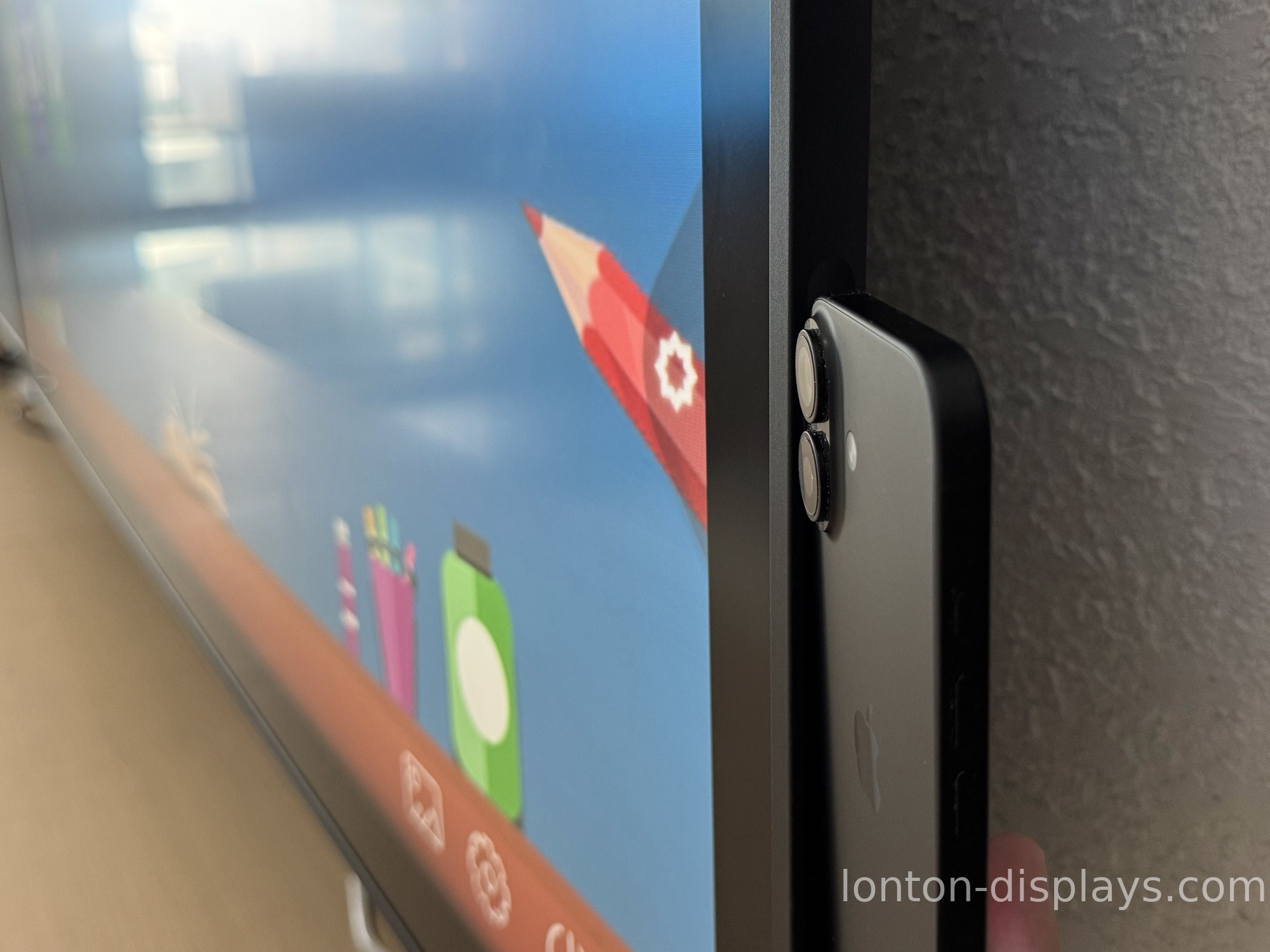
Because we fabricate our own sheet-metal brackets and back panels, the display mounts cleanly and travels well — it's built to be packed, shipped and rebuilt without coming apart. Our panels run Android 15 built-in, deliver 4K UHD at 350 cd/m², and are tested in our own ORT reliability lab before they ship.
If you're planning your next booth, contact us and we'll spec the right display and mounting for your space. You can also browse the interactive flat panel range and read our guide to interactive flat panels for retail.
Frequently Asked Questions
Why use an interactive display at a trade show?
It draws foot traffic with bright, moving content and gives visitors a reason to stop and touch — turning a booth from a poster into a destination.
Can multiple people use a trade show display at once?
Yes, with a 40-point infrared touch surface, two or three visitors can interact at the same time without the panel getting confused.
Does a trade show display need a special mount?
A matched bracket or mobile stand makes setup fast, which matters when booths go up the day before a show. Ask whether the mount is designed for the panel.
Is a trade show display durable enough to ship repeatedly?
A well-built panel with a rigid chassis and matched mounting travels fine. Ask about build quality and how it's tested before shipping.
Can a trade show display capture leads?
Yes — many exhibitors run lead capture on the display, letting visitors enter details or scan a code directly on the screen.