
 English
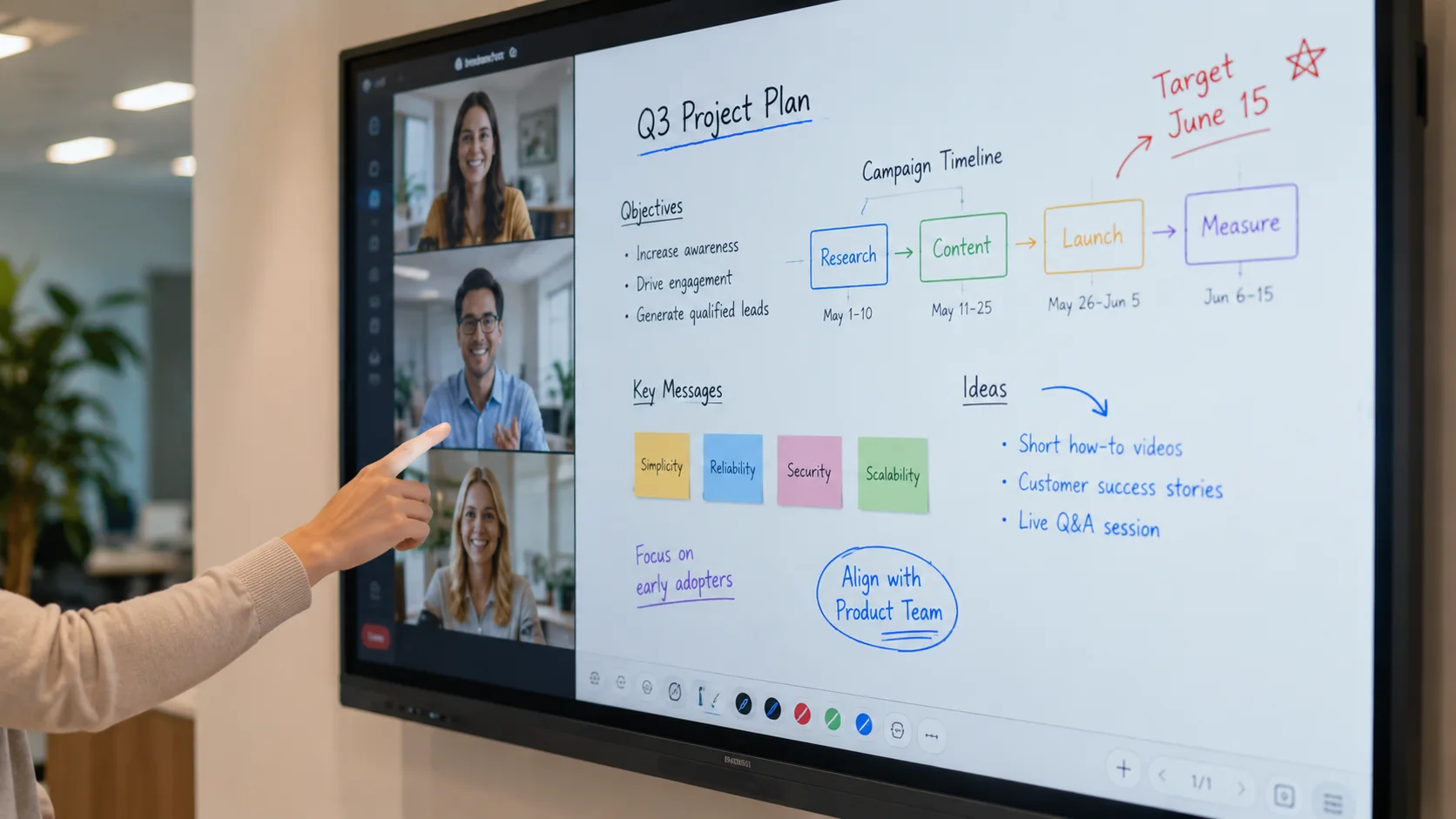
Here's a scene. The client and you are gathered around an interactive display. The proposal gets marked up and revised directly on the screen. The client leans in, points a finger at the screen and says, take a look at this part. The whole meeting doesn't feel like a presentation — it feels like two people drawing sketches around a table. This kind of conversation is probably more likely to lead to a deal.
If you're still using a projector and a whiteboard for sales proposals, what you're missing isn't better talking points. What you're missing is the screen that puts your talking points directly in front of the client's eyes. That's what sits behind the question can an interactive display help you close more deals.
Before the client walks in, the room has already made the judgment for them.
Forget the specs. Look at what the client sees the moment they walk through the door. If they see a projector hanging from the ceiling, cables dangling down. A laptop connected via HDMI, adapters scattered on the table. A pull-down screen with the bottom right corner curling up. Then the first impression we've probably left the client with is — we don't pay much attention to the details.
If you're using an interactive display, it turns on instantly. Lights stay on. Responds the moment your finger touches it. These things have nothing to do with the proposal content. But they decide one thing — whether the client leans forward onto the table when they sit down, or leans back into their chair.
When nobody notices the equipment, it means the equipment is doing its job.

Interruptions are fine — you can handle them.
There's one sentence a traditional proposal dreads: "Hold on, can you show what this looks like with our numbers?"
What did you used to say? "I'll go back and revise it, then send it over." Two days later, you sent it. You don't know whether the client received it. If they did, you don't know if they opened it. They've already taken calls from three other suppliers. Your email is buried five screens down in their inbox.
On an interactive whiteboard, there is no "hold on." They ask, and you open a browser right on the screen. Pull up their data, build a table on the spot, draw two circles, highlight the gap. Thirty seconds. The client watches their own numbers being marked up on your screen — they're not listening to you present. They're participating.
Same scenario, different version of you. The old you said "I'll follow up." The current you says "look right here" — that's not a tech gap. That's a trust gap. That's the answer to can an interactive display help you close more deals.
The client walks out knowing one thing clearly: meeting with this company, problems get solved on the spot.
Remote people are in the room — not hanging on a phone call.
There's always one person missing from a sales meeting. The budget approver is at headquarters. The technical lead is in another city. Procurement is listening in and taking notes. Before, they were just a voice on the other end of a phone — cutting in and out, occasionally asking "can you repeat that last part." They weren't participating. They were listening from the sidelines.
An interactive whiteboard with a built-in camera and omnidirectional microphone pulls these people in. They see the entire room, not just your face. They hear everyone's voice, not just whoever's closest to the laptop. They can mark up the screen. They can draw a red line on a shared document.
The person holding the budget is in another city. But they're not an outsider. The only difference between them and someone in the room — they're missing a cup of coffee.
Do one thing before you buy: have the supplier make a video call to you using that machine. Not a pre-recorded demo video. An actual call, dialed and connected. Look at the picture. Listen to the sound. Experience it yourself from the other end — that's what your clients experience every time they join your meeting.
The follow-up email isn't an attachment — it's a replay.
Traditional follow-up: send a thank-you email, attach the PowerPoint. Client opens it, saves it to some folder, forgets about it.
Interactive whiteboard follow-up: the PowerPoint you send back isn't the original — it's the version you and the client revised together. It has their data on it. The two circles you drew on the spot. The few lines scribbled down during the whiteboard discussion. The client opens this file and what they see isn't "your proposal." It's "what we discussed that day."
That email will sit at the top of their inbox a few days longer. Not because you wrote it better. Because the file has their fingerprints on it. People don't delete things with their own fingerprints on them.
It's not that you pitched better. It's what you prepared that changed.
You might think an interactive whiteboard makes proposal prep more complicated. It doesn't. It changes what you prepare.
Before, you spent two hours on PowerPoint animations — fade in, fly out, transition effects. Effects that look exactly the same on a projector anyway. Now you spend those two hours on something else: anticipating what the client might ask, preparing the corresponding pages and files, saving them into the screen. They have a question, you open a folder, drag the answer out.
The PowerPoint got shorter. But the meeting got longer — the valuable conversation got longer. You're not flipping through slides. You're switching topics. And every topic was pulled out by the client themselves.
Prep time didn't change. What you prepared did. A good sales proposal doesn't rely on page count. It relies on being able to catch whatever comes.

Finally.
This question shouldn't be "can we afford it."
Good sales proposals share one thing: the client didn't just listen through it. They participated through it. They leaned forward. They drew a mark. They asked a question and you pulled it up and showed them right there. When the meeting ends, they're not thinking about whether to consider it — they're thinking about when to start.
If your equipment isn't letting you do this, you don't need better speaking skills. You need to change the screen in your meeting room.
That's can an interactive display help you close more deals — the answer isn't on a spec sheet. It's in whether you walk out of that meeting with confidence, or with doubt.