
 English
A hotel ballroom has to turn into a wedding venue, a product launch, a conference keynote and a board dinner — sometimes all in the same week. The AV in that room has to be flexible enough to switch between all of them without a technician babysitting every event.
A large interactive display, or a video wall of them, has become the default way to do this. It replaces the projector, the pull-down screen and the hired-in AV rack with one system that handles the presentation, the slides and the interaction. But not every big screen survives the way a ballroom gets used.
How hotels use large interactive displays
In a hotel or event venue, a large interactive display usually does one of a few jobs:
Ballroom presentations — the keynote or slides go up on a screen big enough for the back row to read.
Banquet and wedding visuals — names, seating charts, photo slideshows and ambient visuals run on the main display.
Wayfinding and event signage — outside the ballroom, displays show the day's schedule and direct guests to the right room.
Registration and check-in — a touch display lets guests check in or look up their table.
The ballroom display is the one that earns its price. It gets used hardest, it has to look good under event lighting, and it has to work every single time — a black screen in the middle of a wedding is not a recoverable moment.
What event use demands from the hardware
A ballroom display lives under a specific set of pressures:
Size. The back row of a 300-person ballroom is a long way from the screen. This is where the larger sizes — 86-inch and up, or a video wall of several panels — earn their keep. A 65-inch panel that's fine in a meeting room disappears in a ballroom.
Brightness. Event lighting is bright, and stage lights wash over the screen. A panel needs enough brightness to stay legible under those lights, not just in a dim room.
Setup and teardown. Ballroom layouts change between events. A display that mounts cleanly and can be repositioned — on a mobile stand, or with brackets that are easy to move — saves the AV crew real time. This is where a manufacturer that makes its own mounting brackets has an edge: the bracket is designed to match the panel, not a generic afterthought.
Reliability. An event has no second take. The panel has to power on and run for hours without a hiccup, every event, every week.
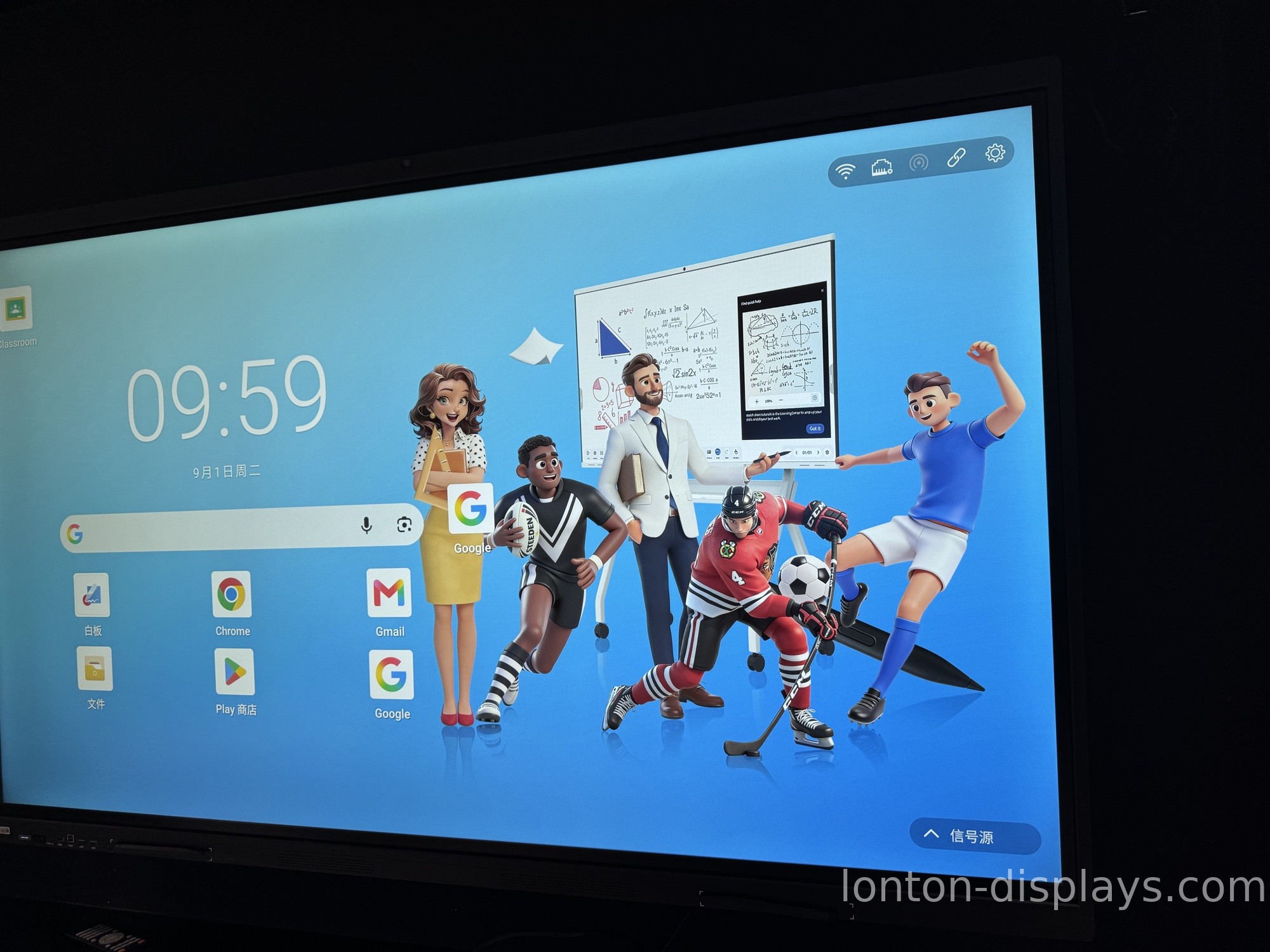
Why the mounting hardware matters as much as the screen
It's easy to focus on the panel and forget what it hangs on. In a ballroom, the mount is doing real work — holding a heavy panel, getting repositioned between events, and staying rigid when the panel is touched during an interactive session.
A manufacturer that fabricates its own sheet-metal brackets and back panels can build a mount that's matched to the panel's weight and balance. A generic third-party mount, or a panel that ships with a flimsy bracket, will loosen and sag over time. Ask who makes the bracket, not just the screen.
What to check before you buy
When you're spec'ing displays for a ballroom or event venue, these are the checks that matter:
1. Size for the room — work back from the back row; for a 300-seat ballroom that usually means 86-inch or larger, or a video wall.
2. Brightness under stage lights — test it with the room lights at event level.
3. Mount and mobility — a matched bracket or mobile stand makes setup and teardown fast.
4. Reliability — ask for the manufacturer's build and testing story, not just the warranty.
5. Touch, if you need it — interactive seating charts and check-in need responsive touch; if it's presentation-only, you can skip it.
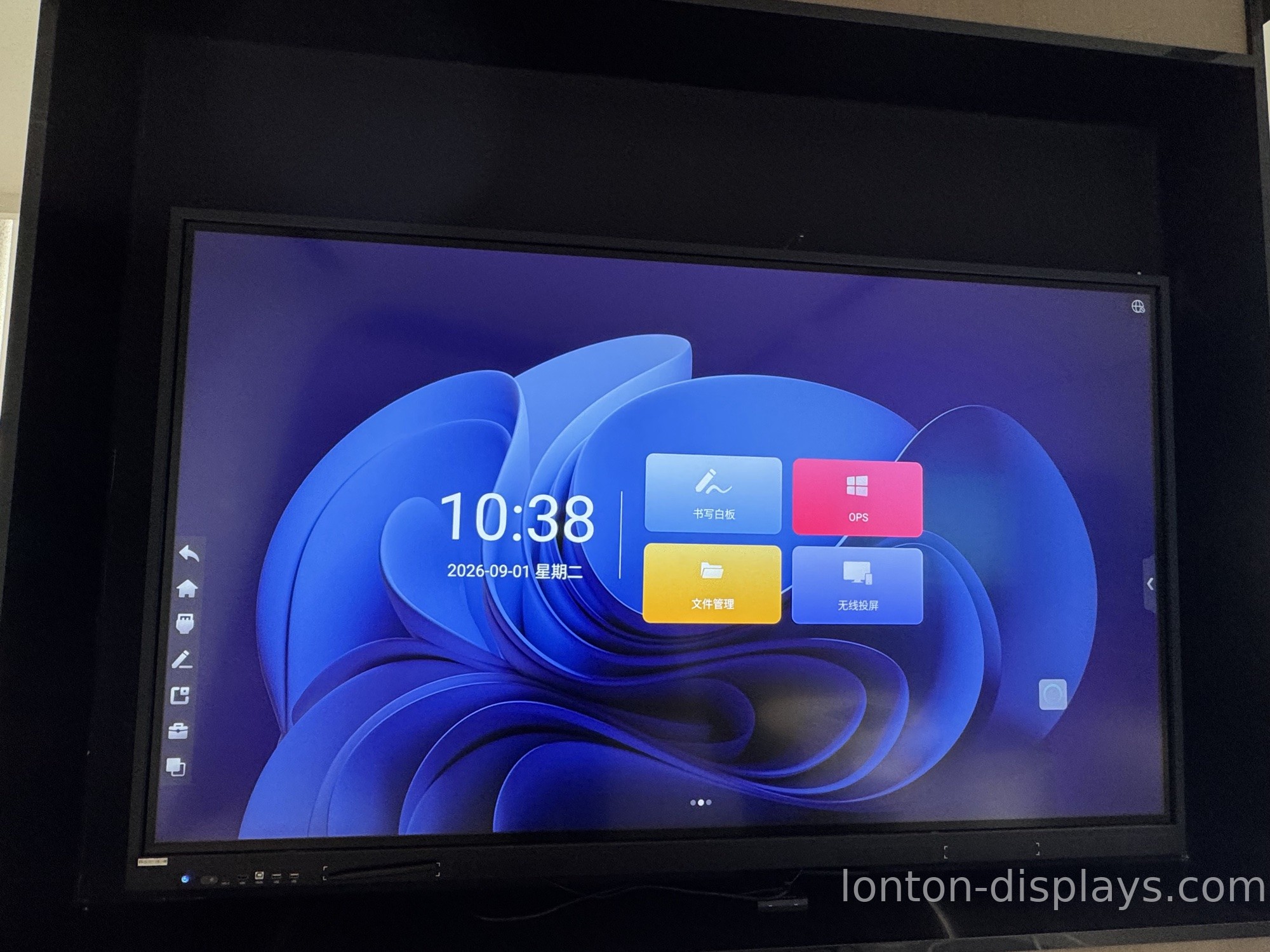
How Lonton fits hotel and event AV
Lonton has been manufacturing interactive flat panels since 2005, and the event use case is exactly where our full-size range matters — from 65-inch up to 110-inch, plus the option to link multiple panels into a video wall for a full ballroom.
Because we fabricate our own sheet-metal back panels and mounting brackets in our own factory, the panel and its mount are designed together, so a display holds up to being repositioned between events. Our panels run Android 15 built-in, deliver 4K UHD at 350 cd/m², and are tested in our own ORT reliability lab before they ship.
If you're outfitting a ballroom, banquet hall or conference venue, contact us and we'll spec the right size and mounting for your rooms. You can also browse the interactive flat panel range and read our guide to wall-mounted vs mobile stand smart boards.
Frequently Asked Questions
What size interactive display does a hotel ballroom need?
Work back from the back row. A 300-seat ballroom usually needs 86-inch or larger, or a video wall of several panels, so the back row can read the screen.
Can an interactive display replace a projector in a ballroom?
Yes — it's brighter, sharper and needs no bulb replacements, and it handles both presentations and interactive use like seating charts and check-in.
Does event lighting wash out the screen?
It can. A panel with enough brightness and anti-glare glass stays legible under stage lights; a dim panel will wash out. Test it at event lighting levels.
Why does the mounting bracket matter for a ballroom display?
Ballroom displays get repositioned between events, so a matched bracket from the panel's own manufacturer stays rigid, where a generic third-party mount will loosen and sag.
Can I link several panels into a video wall?
Yes — multiple panels can be linked into a video wall for a full ballroom or large event space, which is how venues cover a wide stage.