
 English
A control room never sleeps. Whether it's a traffic management center watching a city's intersections, an energy operator monitoring a grid, or a security command center tracking an incident, the room is staffed around the clock and the screens are on for years at a stretch.
That single fact changes everything about how you buy a display for the room. It's not a presentation screen that gets used an hour a day. It's a piece of operational infrastructure, and it has to be treated that way.
How control rooms use large interactive displays
In a control room or command center, large displays do a few specific jobs:
Monitoring walls — live feeds from cameras, sensors and systems arranged so operators can see the whole picture at a glance.
Incident response — when something goes wrong, the display becomes the shared map, timeline and communication surface.
Dispatch and coordination — teams coordinate response across the room using a common visual reference.
Briefings — shift handovers and situation briefings happen in front of the main display.
The common thread is that the display is mission-critical. If it goes dark in the middle of an incident, the room doesn't have a way to do its job.
What round-the-clock operation demands
A control room display lives under a set of conditions no meeting room screen ever faces:
Continuous operation. The screen runs 24/7, often for years. Heat dissipation, component quality and power management decide whether it lasts — and a failure isn't a minor inconvenience, it's an operational risk.
Multiple signals. A control room pulls in feeds from cameras, maps, SCADA systems and databases. The display has to switch between and combine these cleanly.
Readability at distance. Operators sit back from a monitoring wall. Text and status indicators have to be legible from across the room, which drives both size and resolution.
Reliability above all. A control room display is bought for one reason — it has to keep working. This is where the manufacturer's build and testing story matters more than the price.
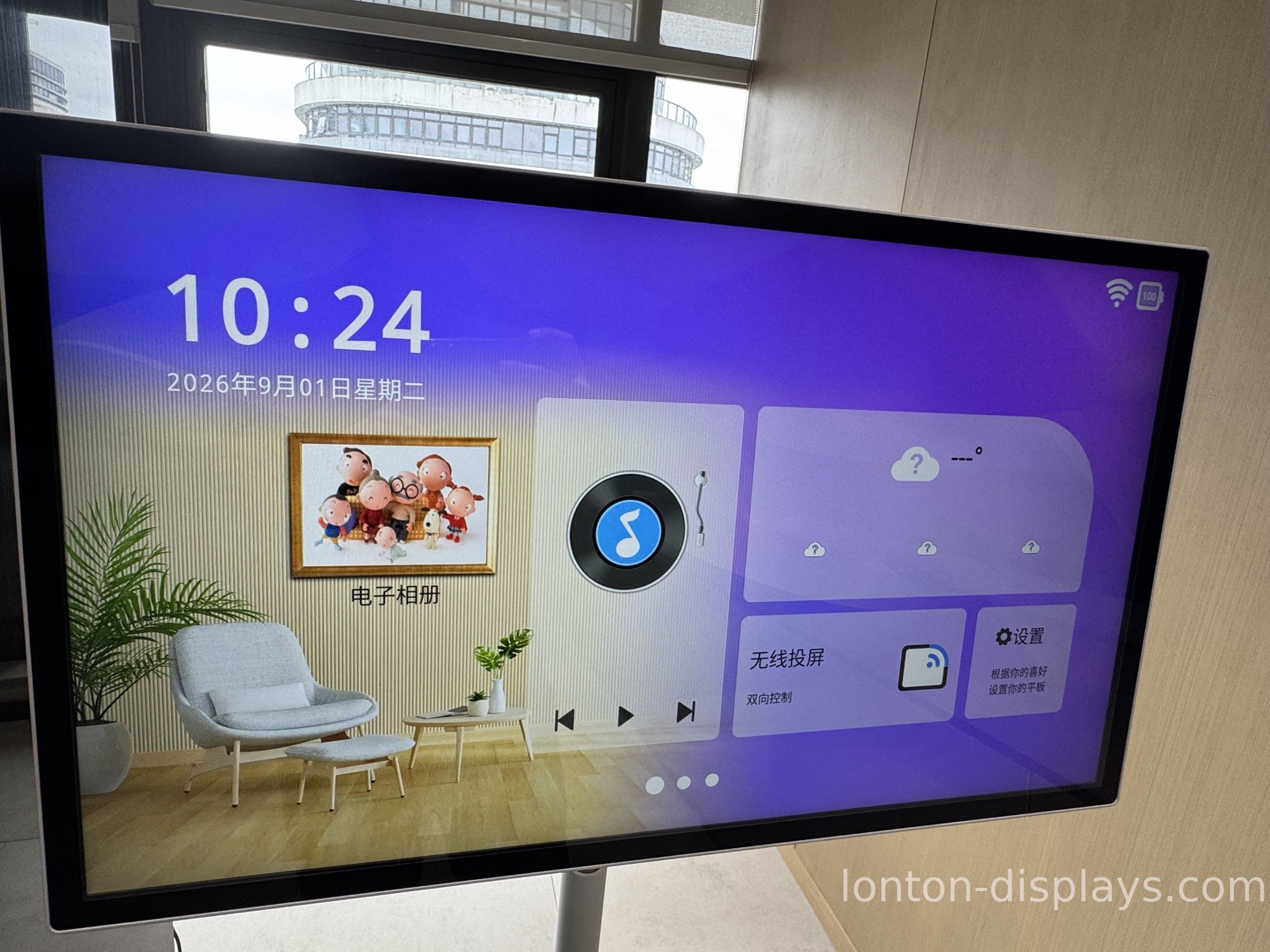
Why the manufacturer is the deciding factor
Two displays can list identical specs and behave completely differently after a year of 24/7 operation. The difference is the factory and the testing behind them.
A manufacturer that runs its own reliability lab can test a display the way a control room will actually use it — powered on continuously, under load, with temperature cycling — before it ships. A manufacturer that fabricates its own sheet-metal chassis and brackets can build a mounting that holds up to a permanent installation. An assembler buying generic parts and screwing them together can't make either promise, and in a control room that difference shows up at the worst possible time.
What to look for in a control room display
When you're spec'ing displays for a control room or command center, these are the checks that matter:
1. Duty cycle — confirm the panel is rated for 24/7 operation, not intermittent use.
2. Reliability testing — a manufacturer with its own lab can show you test data, not just claims.
3. Size and resolution for the room — work back from the viewing distance; a wide monitoring wall usually means large panels or several linked together.
4. Signal handling — make sure the display handles the inputs your systems use.
5. Mounting — a permanent installation needs a solid, matched mount from the panel's own manufacturer.
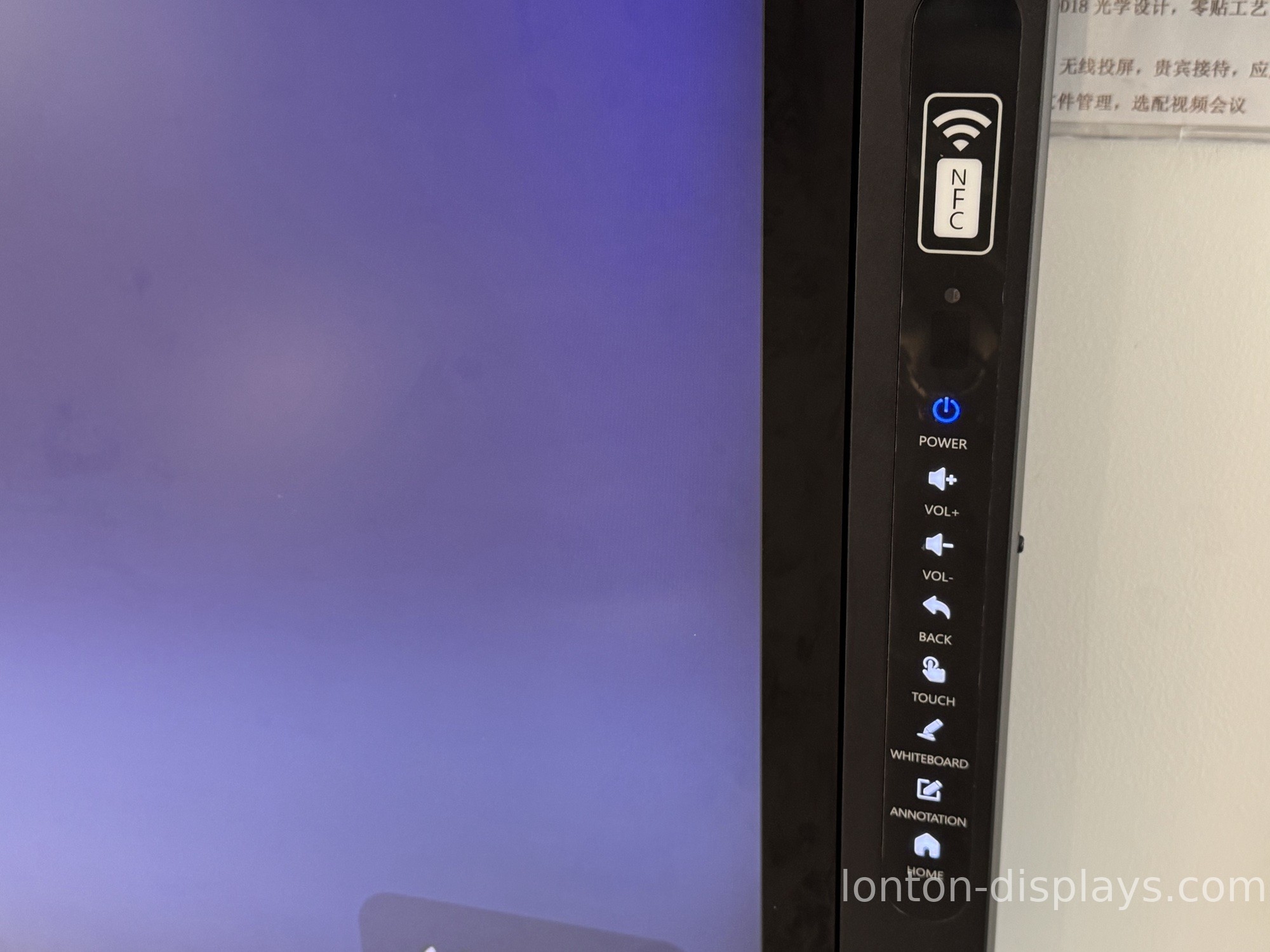
How Lonton fits control rooms and command centers
Lonton has been manufacturing interactive flat panels since 2005, and the control room use case is where our build quality and full-size range come together. Our panels span 65-inch up to 110-inch, deliver 4K UHD at 350 cd/m², and run Android 15 built-in with the option to link multiple panels into a wide monitoring wall.
Because we fabricate our own sheet-metal chassis and brackets and run our own ORT reliability lab, a panel heading to a control room is the same build we stress-test for continuous operation before it ships. That's the same reliability story we detail in our factory floor guide — industrial conditions are where our in-house manufacturing matters most.
If you're outfitting a monitoring wall, dispatch room or command center, contact us and we'll spec the panels and mounting for your room. You can also browse the interactive flat panel range and read our guide to interactive flat panel warranty coverage.
Frequently Asked Questions
Can interactive displays run 24/7 in a control room?
Yes, if they're rated for continuous operation and built for it. Confirm the duty cycle and ask about the manufacturer's reliability testing before you buy.
Why does the manufacturer matter for control room displays?
An in-house manufacturer with its own reliability lab can test for continuous operation before shipping. An assembler buying generic parts cannot guarantee the same reliability.
What size displays does a control room need?
Work back from the viewing distance. A wide monitoring wall usually means large panels (86-inch and up) or several panels linked together.
Can I link several displays into a monitoring wall?
Yes — multiple panels can be linked into a wide monitoring wall, which is how control rooms build a shared visual reference across the room.
Do control room displays need touch?
Often, yes — incident response and dispatch benefit from operators marking up a shared map or timeline directly on the display. But some monitoring walls are display-only.