
 English
Why the screen is the part buyers overlook
Buyers spend hours comparing processors and touch points, then assume the screen will just survive. It won't — not in a classroom. A school panel gets written on for hours a day, poked by dozens of hands, and occasionally hit by a marker, a ruler or a stray elbow. In an office it gets tapped through back-to-back meetings. The glass is the part of the panel that takes the daily abuse, and it's the part most buyers never ask about.
The question worth asking isn't "does it have a screen" — it's "what protects that screen, and how long will it last under real use." The answer lives in three things: the glass, the hardness rating, and the coating.
Tempered glass is the baseline, not a feature
Any interactive flat panel worth buying uses tempered glass — glass that's been heat-treated so it shatters into small, blunt pieces instead of sharp shards if it breaks. That's a safety requirement, not a luxury. A panel sold without tempered glass is a red flag, full stop.
The number that actually matters next is the hardness rating. Lonton's panels use tempered glass rated MOHS 7, which is hard enough to resist scratches from everyday objects — keys, pens, rings — so the surface stays clear after years of writing and touching. Lower-rated glass clouds and scratches over time, and a scratched screen is the first thing that makes a panel feel old.
Anti-glare and anti-fingerprint are what keep it usable
Hardness protects the screen from damage; coating protects it from looking bad. A classroom or meeting room has windows and overhead lights, and a bare glass panel turns them into reflections that wash out the image by midday. An anti-glare coating diffuses that light so the board stays readable, and an anti-fingerprint layer stops the screen turning into a smudge of handprints after the first session.
These two sound cosmetic, but in a room used all day they're the difference between a panel people can read and one they squint at. When you compare quotes, ask whether the glass has anti-glare and anti-fingerprint treatment — cheap panels skip both to save cost.
How to actually test durability before you commit
You can't judge glass durability from a spec sheet alone, but you can check it before a big order. Three ways:
1. Ask for a sample. A factory confident in its glass will ship a panel you can scratch, tap and write on. If they won't send one, that tells you something.
2. Ask about the hardness rating in writing. MOHS 7 tempered glass is the standard for commercial panels; anything unrated is worth questioning.
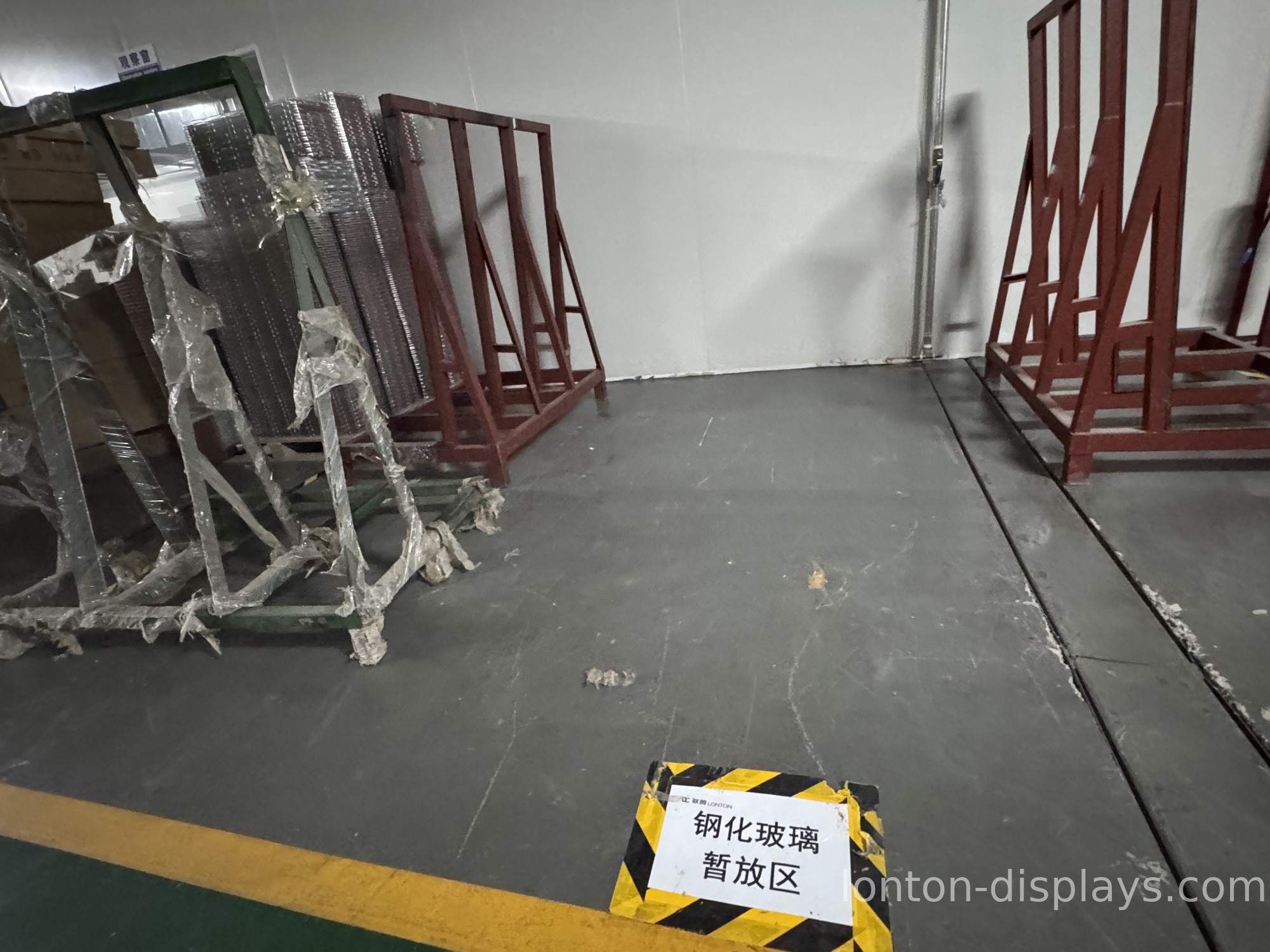
3. Watch a factory video or audit. See the panel being assembled and the glass being handled — a cleanroom line treats the glass differently from a warehouse floor.
How Lonton builds the screen to last
Lonton has been manufacturing interactive flat panels since 2005 from a 100,000-square-meter facility with a Class 10,000 cleanroom. Every panel ships with MOHS 7 tempered glass, an anti-glare coating and an anti-fingerprint treatment, so the screen holds up to years of classroom or meeting-room use without clouding, scratching or turning into a fingerprint gallery. The glass is assembled on a cleanroom line, where dust and particles are controlled — the same reason the panel's brightness and clarity stay where they should.
If you're still narrowing down the right panel size for your space, our guide to choosing the right interactive flat panel size is worth reading next. For the full durability and certification checklist, see our school interactive flat panel RFP template.
Get a panel built to survive your room
Tell us how your room is used — school, office, high-traffic or hybrid — and we'll match you to the right panel, glass and coating, with a factory-direct quote. Contact Lonton or browse our interactive flat panels.
Frequently asked questions
How hard is the glass on an interactive flat panel?
Quality panels use tempered glass rated MOHS 7, hard enough to resist scratches from everyday objects like keys, pens and rings.
What is the difference between tempered and regular glass?
Tempered glass is heat-treated to shatter into small, blunt pieces instead of sharp shards. It's a safety baseline for interactive panels.
Does an interactive flat panel need anti-glare coating?
Yes, for rooms with windows or overhead lights. Anti-glare diffuses reflections so the screen stays readable through the day.
How can I test a screen's durability before ordering?
Ask for a sample panel, get the hardness rating in writing, and watch a factory video or audit to see how the glass is assembled.