
 English
Smart Whiteboard Cost: What You're Actually Paying For
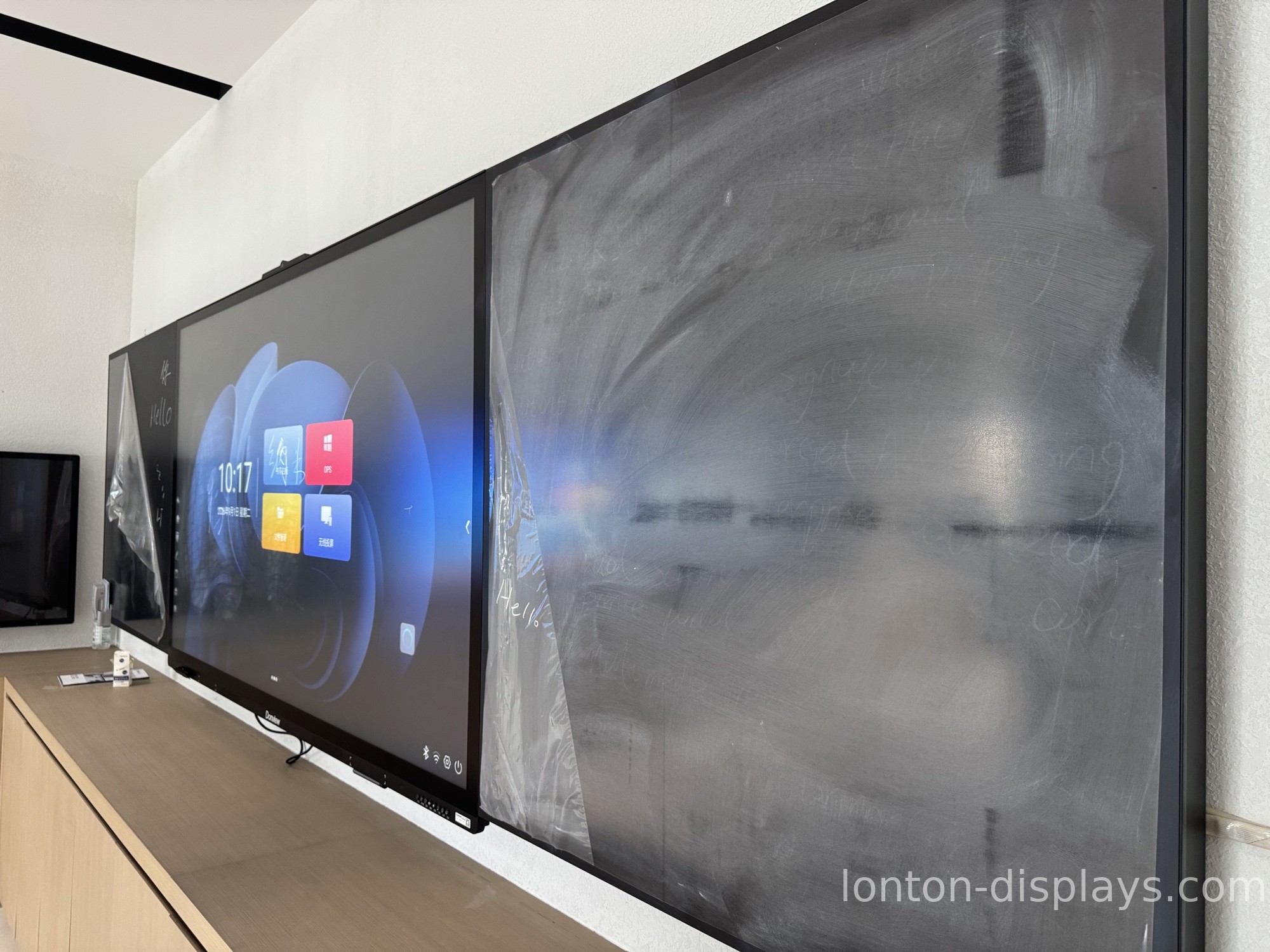
Two buyers can walk away from a smart whiteboard purchase with the same screen size and pay amounts that are thousands of dollars apart. Neither got ripped off, and neither got a "deal" — they just bought through different channels and understood the cost differently. If you're comparing quotes and the numbers don't line up, it's usually because the cost breakdown isn't visible on the invoice.
Here's what a smart whiteboard's price is actually made of, line by line, so you can tell whether a quote is fair or padded.
The panel is the biggest line item
More than any other component, the LCD panel sets the baseline cost. A 65-inch panel and an 86-inch panel aren't just different sizes — the price per diagonal inch climbs as you go up, and the panel grade matters too. Smart whiteboards built for classrooms and meeting rooms use commercial-grade panels from suppliers like BOE and CSOT, rated for long duty cycles, not the consumer panels you'd find in a living-room TV.
This is the first place quotes diverge. A cheap quote often means a consumer-grade panel. It'll look fine on day one and wash out or develop issues under eight-hour-a-day use. The panel is the one place you don't want the discount.
Touch technology adds a real layer
That touch layer isn't a sticker. Infrared touch means a frame of IR emitters and receivers around the display, driving 40 simultaneous touch points. It's a separate bill of materials from the panel, and it's one reason a smart whiteboard costs more than a monitor of the same size. Cheap boards cut here by dropping to fewer touch points or a lower-grade sensor — you feel it the first time two people try to write at once.
The compute and system are a hidden cost center
Inside the frame there's a real computer: an Android motherboard with RAM and storage, plus WiFi and Bluetooth radios. Then there's the optional OPS slot. If you need Windows — and most corporate buyers do — the OPS module is a separate purchase that can add hundreds of dollars on its own. A quote that lists the panel but doesn't mention whether an OPS module is included isn't a complete quote.
Certifications aren't free
CE, FCC, and RoHS aren't stickers you print. Each one means testing, documentation, and compliance work, and for a factory selling into North America and Europe they're non-negotiable. ISO 9001, 14001, and 45001 add another layer of process cost. A board without these is cheaper for a reason — and usually illegal to resell in your market.
Where the markup hides
Every layer between the factory and your wall adds a percentage. A reseller buys from a distributor, who bought from an importer, who bought from the factory — and each step adds 15–30% for the privilege of holding inventory and taking a cut. By the time a quote reaches you, three or four of those layers may be baked into the number, and none of them made the board better.
This is why two identical-spec boards can land so far apart on price. It's not that one is "cheap" — it's that one has fewer hands in the middle.
What factory-direct actually saves
Lonton has run the same factory since 2005: a 100,000 m² facility with 15 production lines and capacity for more than 10,400 units a month. When you buy factory-direct, the quote comes from the people who build the panel, not from a chain of intermediaries. MOQ starts at 5 units, so even a single-classroom or single-office order gets manufacturer pricing instead of retail markup. OEM branding — your logo on the frame and boot screen — is a small add-on at the factory level, not a separate licensing deal.
The takeaway isn't that you should chase the lowest number. It's that you should be able to see what's behind the number. Ask any supplier to break down the panel grade, the touch points, whether an OPS module is included, and which certifications are in place. If they can answer those four questions clearly, you're comparing real costs. If they can't, the price is probably the only thing they're being transparent about.
If you want a factory-direct quote with the cost breakdown on the table, tell us the size and how many rooms you're outfitting — we'll send a line-by-line number you can actually compare. And if you're weighing this against a projector setup, this 5-year total cost of ownership comparison is worth reading first.
FAQ
Why do smart whiteboard prices vary so much for the same size?
Panel grade, touch points, included compute, and the number of reseller layers between the factory and you. Two 86-inch boards can differ by thousands of dollars on those four things alone.
Is the OPS module included in the quoted price?
Not always. The OPS module is usually a separate line item. Always ask whether a quote includes it, especially if you need Windows.
Why is factory-direct cheaper?
Because there are no distributor, importer, and reseller markups layered on top. You're paying the manufacturing cost plus a margin, not a chain of margins.
What's the minimum order for factory-direct pricing?
Lonton's MOQ is 5 units, so a single classroom or office can buy at manufacturer pricing.