
 English
Interactive Flat Panel vs Smart Board: The Difference (2026)
If you have been comparing "interactive flat panels" and "smart boards," here is the honest answer up front: they are the same product. "Smart Board" is a brand name from SMART Technologies that became a generic term, the way "Kleenex" became shorthand for tissues. This guide explains where the two names come from, what actually differs between products, and how to buy without overpaying for a label.
They are the same category of product
Both terms describe the same thing: a large touchscreen display that replaces a projector and whiteboard in a classroom or meeting room. An interactive flat panel and a smart board both:
- Let you write, draw, and annotate directly on the screen
- Run apps and software
- Support wireless screen sharing
- Come in the same sizes, from 65 inches up to 86 and beyond
When one school asks for a "smart board" and another asks for an "interactive flat panel," they are almost always asking for the same product.
Where "smart board" comes from
SMART Board is a trademark of SMART Technologies, a Canadian company that made interactive whiteboards popular in classrooms in the early 2000s. Because they dominated schools for years, "smart board" became shorthand for any interactive display — the way "Google" became a verb. Most "smart boards" sold today are not actually SMART brand products; they are interactive flat panels made by other manufacturers.
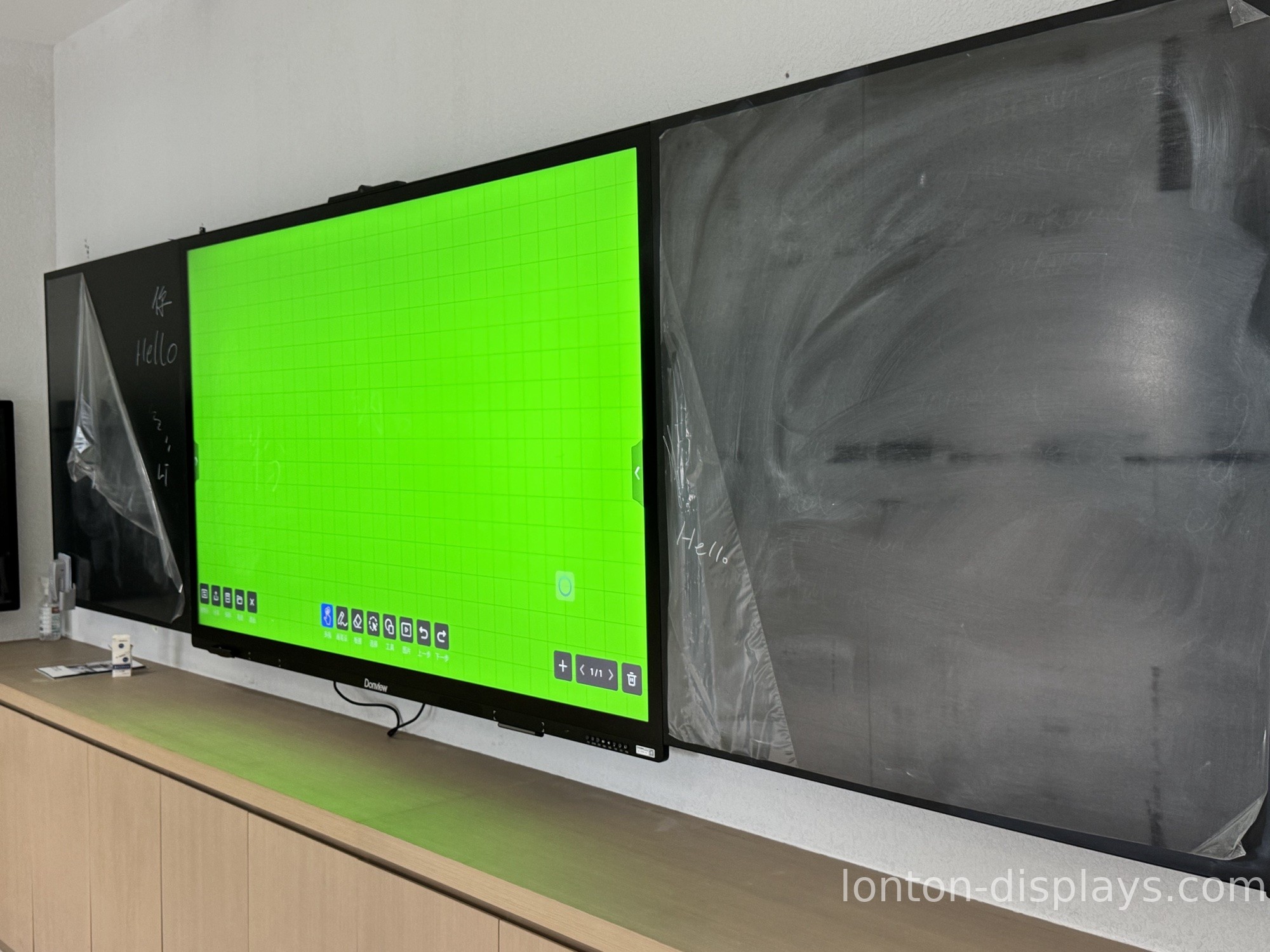
What can actually differ
The name does not tell you much, but the specifications do. When you compare boards, these are the real differences that matter:
- Touch technology. Infrared (IR) versus capacitive. IR is the standard for classrooms and meeting rooms — it is more affordable and works with any pen or finger, with no calibration needed.
- Operating system. Android built in, Windows through an OPS slot, or both. A dual-system board gives you the most flexibility.
- Size. Sixty-five inches is the most common for a classroom; 75 and 86 inches suit larger rooms and lecture halls.
- Panel quality. The LCD grade and brightness. Around 350 cd/m² is a solid classroom standard.
Why the naming does not matter (and what does)
Buyers sometimes overpay because they believe a "smart board" is a different, better product than an "interactive flat panel." It is not. What separates a good board from a bad one is the hardware and the warranty, not the word on the box. Focus on these instead:
- Glass hardness and scratch resistance — MOHS 7 tempered glass survives classrooms and meeting rooms
- Number of touch points — 40-point IR lets a group write at the same time
- Whether the seller is the factory or a reseller — factory-direct cuts out the middleman markup
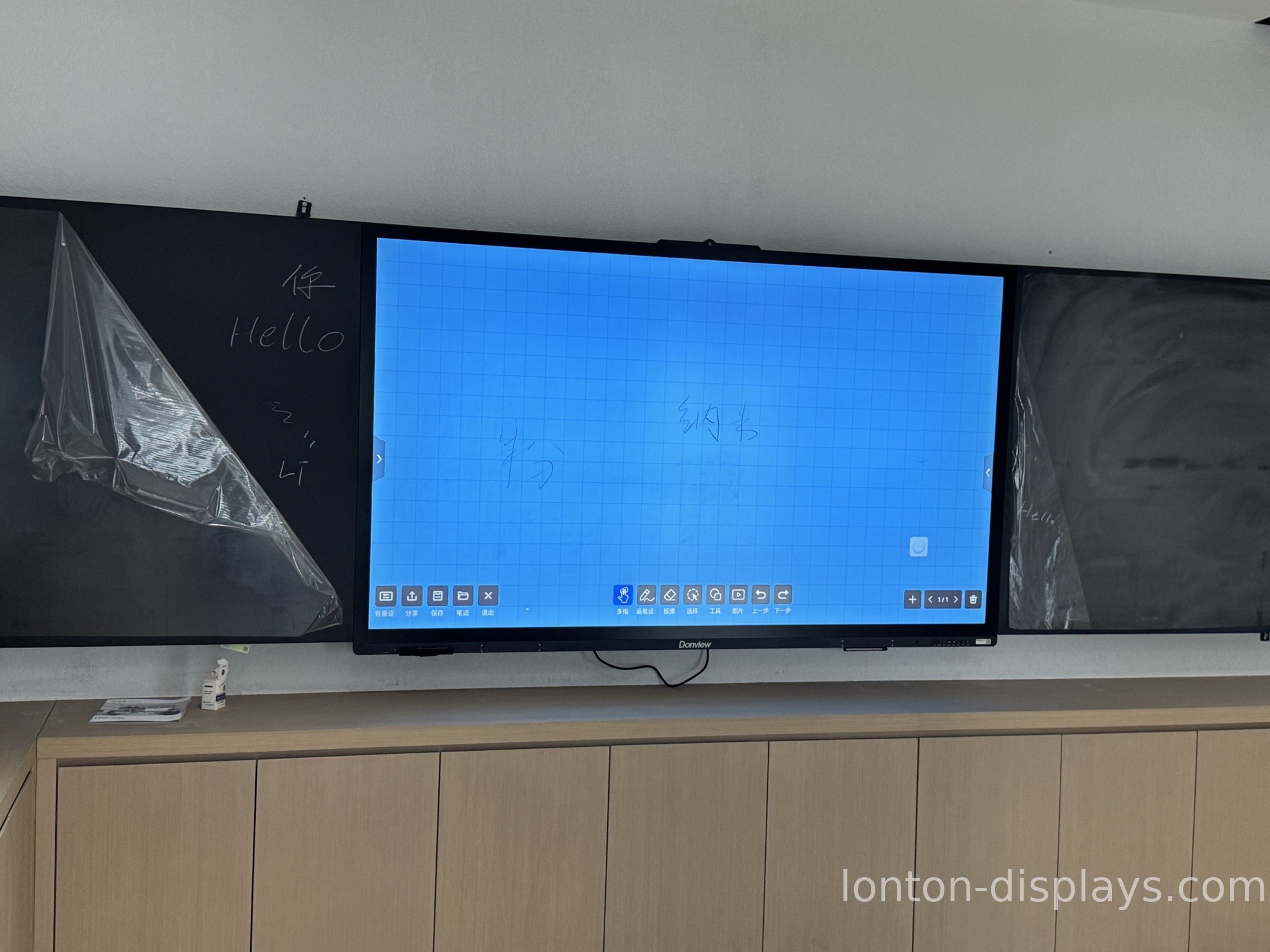
How Lonton fits
Lonton manufactures interactive flat panels from 65 to 110 inches — the same product category schools and businesses call "smart boards." Every unit has 40-point infrared touch, MOHS 7 anti-glare tempered glass, Android 15 with an optional Windows OPS slot, and BOE or CSOT panels. Whether your buyer calls it an interactive flat panel or a smart board, the board is the same factory-direct product, with OEM branding and ISO 9001, CE, FCC, and RoHS certification. For more on the touch technology that powers these boards, see our guide on how infrared touch works.
Get a factory-direct quote
If you are sourcing boards — for classrooms, meeting rooms, or your own brand — tell us the sizes and quantities you need, and we will send a factory-direct quote. You are also welcome to visit the factory or do a live video tour of the production line.
Contact us or browse our interactive flat panels.
FAQ
Is a smart board the same as an interactive flat panel?
Yes, essentially. "Smart Board" is a brand name from SMART Technologies that became a generic term for interactive displays. An interactive flat panel and a smart board are the same category of product.
Why are some smart boards more expensive?
Usually brand premium. A generic interactive flat panel with the same specifications gives the same function at a factory-direct price, without the brand markup.
What is the difference between infrared and capacitive touch?
Infrared (IR) is the standard for classrooms and meeting rooms — it is more affordable, works with any pen or finger, and needs no calibration. Capacitive is smoother but pricier and less common for large classroom boards.
Should I buy a SMART brand board or a generic one?
Compare specifications, not brands. A factory-direct interactive flat panel with the same touch, glass, and OS is usually far less expensive than a branded board with identical specs.