
 English
Interactive Flat Panel Aging Test: Why It Matters (2026)
Every interactive flat panel works on day one. The question that actually matters is whether it still works six months later. That is where the aging test comes in — and it is one of the few quality checks a buyer can confirm before an order ships.
What an aging test actually is
An aging test (also called a burn-in test) means powering a panel on and running it non-stop before it leaves the factory. At Lonton, that is typically 72 hours straight, cycling through solid colors, test patterns, and continuous video. The point is to give every weak pixel, backlight flaw, or touch fault time to show itself — before the panel reaches your wall.
Why electronics fail early
Electronics follow a well-known pattern called the bathtub curve: a product is most likely to fail at the very beginning of its life, and again at the very end. The failures in the middle are rare. Most defects that survive the factory and show up in a customer's first few months were actually there from the start — a weak solder joint, a borderline component, a pixel sitting on the edge.
The aging test is how a factory catches those early failures in-house, instead of shipping them to you.
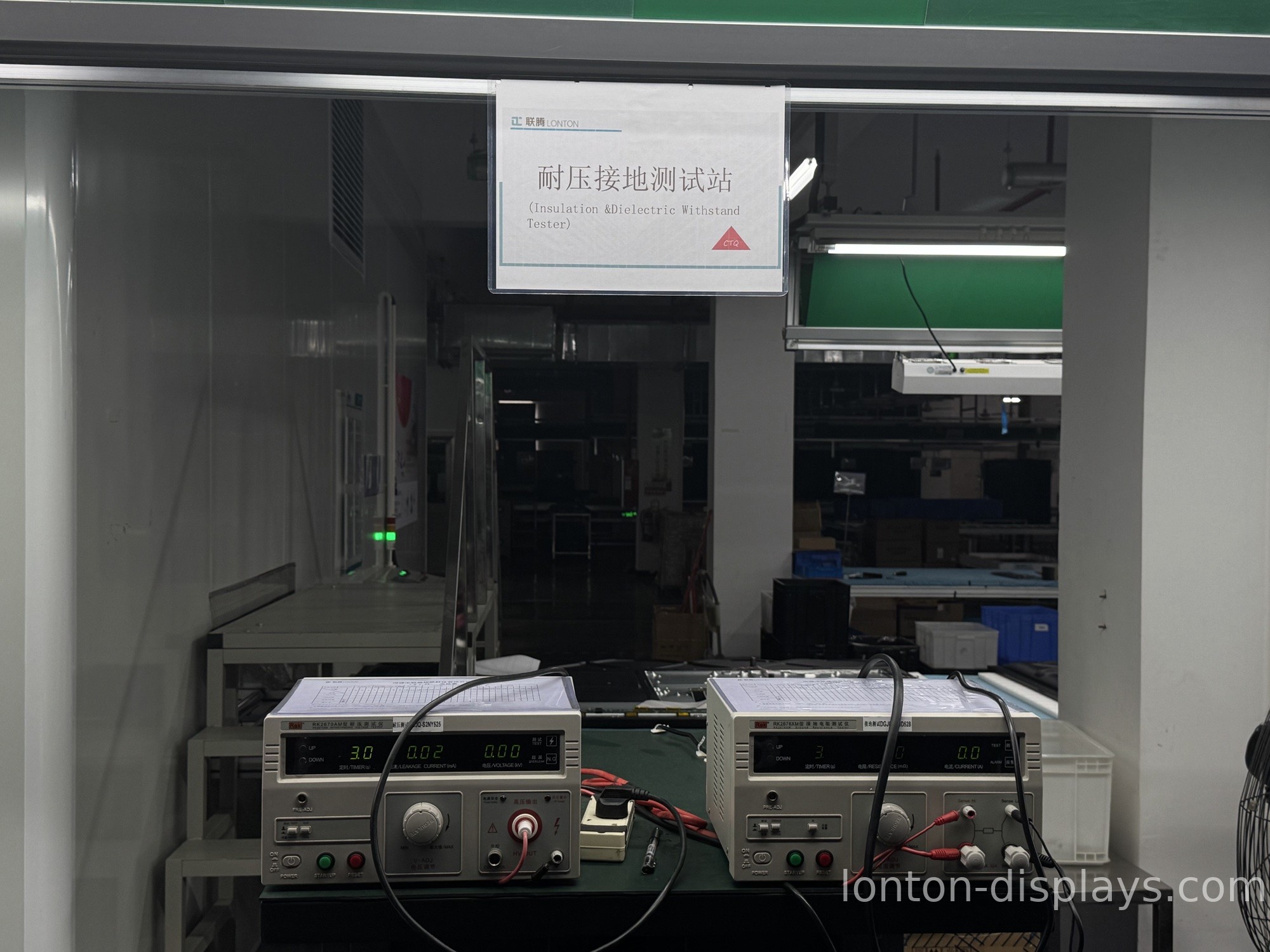
What the test catches
Three things show up most often during a 72-hour run:
- Dead or stuck pixels that a quick visual check misses.
- Backlight issues — uneven brightness, dark spots, flicker.
- Touch faults — dead zones or drift that only appear after the panel warms up.
None of these are guaranteed to appear in a ten-minute power-on test. They need heat and time.
How we run the aging test
Every panel runs our full aging test before it ships. We power each unit on and run it non-stop — typically 72 hours — cycling through solid colors, test patterns, and continuous video, so any dead pixel, backlight flaw, or touch fault has time to surface. During the whole run it stays in a dedicated aging room at elevated temperature, pushing the components the same way real daily use will.
The reason is simple: electronics that are going to fail usually fail early. By running every panel 72 hours straight before it ships, we burn off those early failures in our factory — so the panel you mount is far more likely to keep running trouble-free for years. We'd rather catch a problem here, on our bench, than have you find it on your wall.
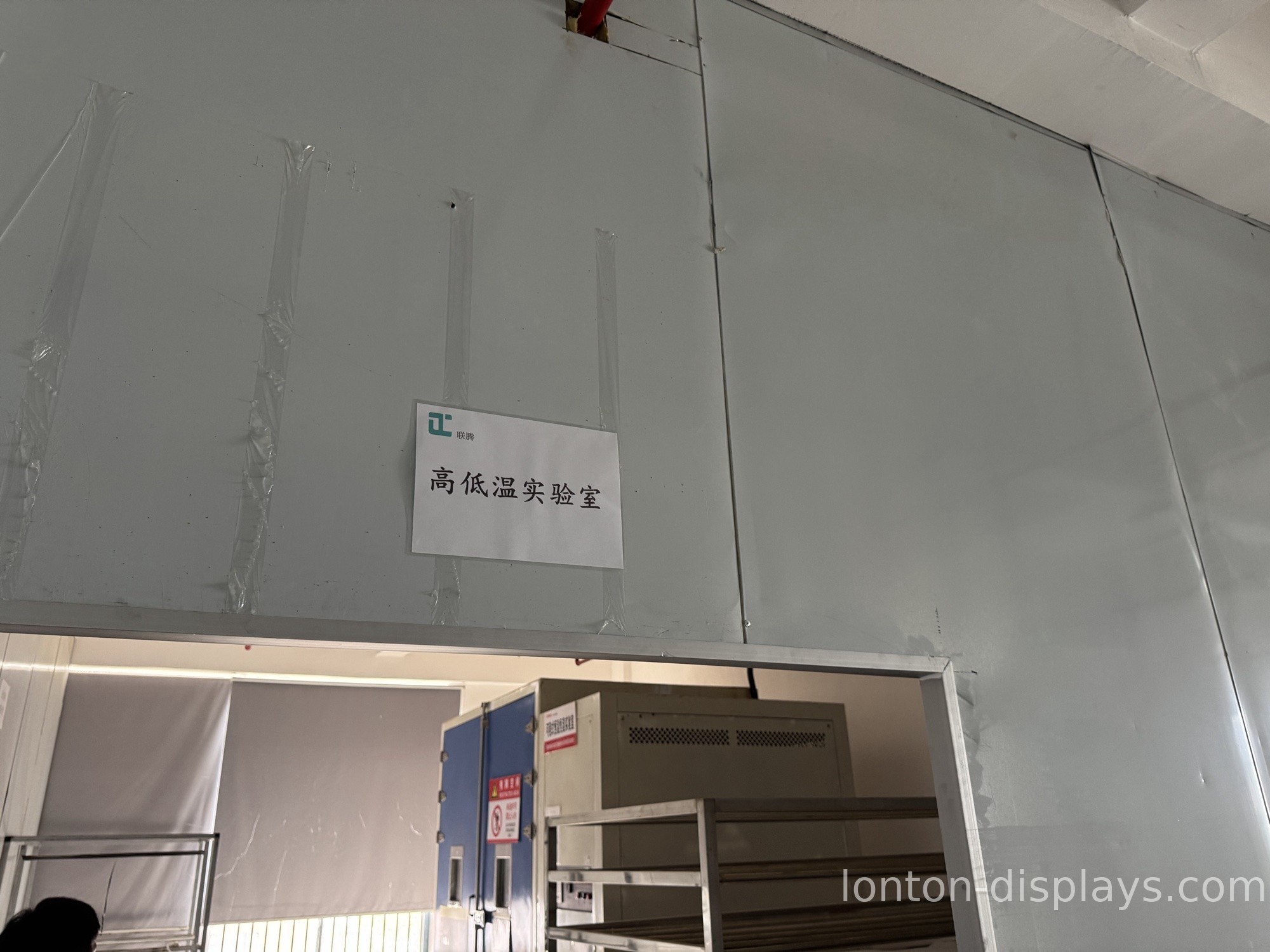
What to ask a manufacturer about aging tests
If you are vetting a supplier, do not accept "we test every unit" as an answer. Ask for specifics:
- How long is the aging test, and what does it actually run?
- Does it run at elevated temperature, or just at room temperature?
- What happens to a panel that fails — is it repaired, reworked, or scrapped?
- Can I see the aging room on a factory tour?
A factory that runs a real aging test can answer all of these with numbers. One that does not will keep it vague.
Get a factory-direct quote
If you are sourcing interactive flat panels, the aging test is one of the easiest quality checks to confirm before you commit to a supplier. Tell us the sizes and quantities you are looking at, and we will send a factory-direct quote — and you are welcome to visit and watch the aging room run.
Contact us or browse our interactive flat panels.
FAQ
How long should an interactive flat panel aging test be?
Twenty-four hours catches the obvious failures. Seventy-two hours catches the marginal ones. The longer the run, the more early failures get burned off in the factory instead of surfacing at the customer's site.
What is the bathtub curve?
The bathtub curve is the pattern where electronics fail most often at the very beginning and the very end of their life, and least often in the middle. An aging test targets the early failures at the start of that curve.
Is an aging test the same as a QC check?
No. A QC check inspects a panel at a single point in time. An aging test stresses it continuously over 72 hours, which surfaces latent defects a one-time check would never catch.
Can I visit the factory to see the aging test?
Yes. We encourage buyers to visit our factory and watch the aging room run. A manufacturer that will not let you see the line is a red flag.