
 English
Interactive Flat Panel Buying Guide for System Integrators (2026)
A few months back, an integrator called us in the middle of a 14-room corporate fit-out. He had already quoted the job with panels from another supplier, and the client had just rejected the install because the displays wouldn't talk to their Crestron controller. He wasn't asking about price. He was asking whether our panels would integrate cleanly, and whether we'd still pick up the phone at month nine.
That's the difference between buying a panel and buying a panel you'll be on the hook for. As a system integrator, you don't just resell a screen — you're the one who has to make it work in someone's boardroom, classroom, or control room, and you're the one they call when it doesn't. This guide is written for that reality, not for the spec sheet.
Spec the panel to the room, not to the brochure
The first thing I tell integrators is to stop comparing panels by headline spec and start matching them to the room they're going into. A 350 cd/m² panel is plenty in a windowless boardroom; the same panel next to a floor-to-ceiling window will look washed out by mid-afternoon. An 86-inch display is right for a 10-person room but swallows a huddle space. If the room has a lot of natural light, anti-glare glass matters more than another hundred nits of backlight.
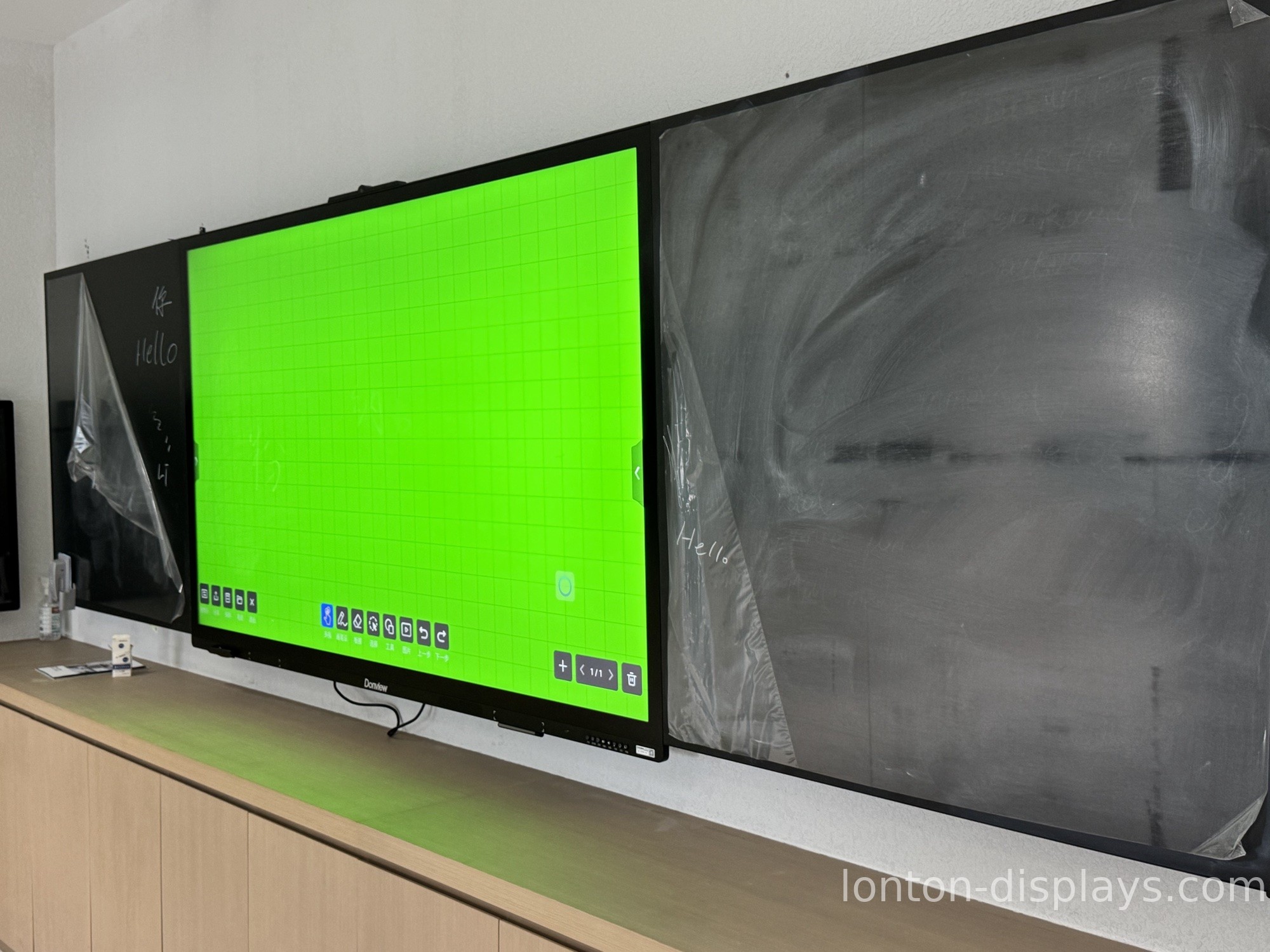
The sizes that cover almost every project are 65", 75" and 86", with 98" and up for lecture halls and large training rooms. Get the resolution right once — 4K UHD (3840 × 2160) is the floor now, not an upgrade — and then spend your attention on the parts of the spec the client never reads: touch technology, glass, and what's inside the chassis.
What actually matters for integration
Most "buying guides" skip this part because it isn't glamorous, but it's the part that costs you your margin. Here's what separates a panel that drops into a project from one that fights you:
- Control-system compatibility. The panel should expose RS-232 and IP control, and ideally CEC, so it drops into Crestron, Extron, or AMX without a custom driver. Ask the factory before you quote, not after.
- An OPS slot. A Windows 11 Pro OPS module turns the panel into a full PC. That's how you standardize on one software image across a fleet, and it's how you rescue a job when the client changes their mind about the platform halfway through.
- Touch you don't have to explain. Infrared 40-point touch needs no calibration and works with a finger, a stylus, or a glove. You don't want to be teaching a client's IT team how to recalibrate a capacitive screen.
- Firmware stability. Ask how the factory handles updates. A panel that ships with a stable Android 15 build and a documented update path saves you a site visit later.
Every one of these is a question you can ask in a single email before you commit — and the answers tell you more about the factory than the brochure ever will.
Reliability you can actually stand behind
When a panel fails six months into a three-year client contract, the cost comes out of your pocket, not the client's. So reliability isn't a nice-to-have; it's the whole point. Three things to check:
First, the panel grade. A-grade interactive flat panels from BOE or CSOT are what you want — cheaper B-grade or reclaimed panels are where the dead pixels and drifting colours come from. Second, what testing the factory does before it ships. A 48-hour aging test catches the failures that would otherwise land in your client's room. Third, the warranty, and just as importantly, whether the factory keeps spare parts in stock rather than promising a lead time they can't meet.
One number worth asking for: first-pass yield. Ours runs at 98%, with a 99.95% final pass rate. It's the kind of number that sounds like marketing until you're the one replacing a unit.
Margin without a middleman
Integrators live or die on margin, and the single biggest way to protect it is to buy from the factory instead of through two layers of distribution. When you source direct, the price reflects the panel, the components, and the assembly — not a chain of markups. That's the difference between winning a competitive bid and sharpening your pencil to the bone.
Lonton runs a 100,000+ m² facility with 15 production lines and a 23,000 m² Class 10,000 cleanroom, so the units come off our own line — SMT to module to final assembly, all in-house. For an integrator, that means one supplier to hold accountable instead of a mystery chain behind a trading company.

When the project slips
Projects slip. That's not pessimism, it's the job. The question is what your supplier does when it happens. Ask about real lead times (not the brochure number), minimum order quantity — ours is five units, which means you can take a small pilot order instead of betting on a full container — and whether they'll hold stock for a phased rollout.
An integrator's reputation isn't built on the first panel; it's built on the panel they deliver when the schedule is already broken. Choose a supplier who answers email the same day and keeps spares in the warehouse, and you've just bought yourself the easiest sell in AV: a happy client who calls you for the next building.
Get a quote for your next project
If you're quoting a project — schools, boardrooms, control rooms, or a whole campus — tell us the room sizes and quantities, and we'll send you a spec-matched quote with factory-direct pricing, usually within 24 hours. You can start with a sample unit to verify integration before you commit to the full order.
FAQ
What's the minimum order for integrators?
Five units. That lets you take a pilot order or a single-room trial before committing to a larger rollout.
Do Lonton panels integrate with Crestron and Extron?
Yes — the panels expose RS-232 and IP control with CEC support, so they drop into Crestron, Extron, and AMX systems without a custom driver.
What sizes do you offer?
65", 75", 86", 98", 105" and 110", covering everything from a huddle room to a lecture hall.
Can I white-label the panels for my own brand?
Yes — logo, boot screen, packaging and manuals are all customizable through our OEM/ODM service.
What's the warranty?
One year standard, with extended coverage available. We keep spare parts in stock rather than promising lead times we can't meet.
How fast can I get a quote?
Usually within 24 hours. Send the room sizes and quantities and we'll spec-match it for you.