
 English
Walk into an electronics store and every screen you touch — your phone, your tablet, the self-checkout kiosk — uses capacitive touch. It is smooth, responsive, and so familiar that you do not think about it. So when someone shopping for an interactive flat panel sees a spec sheet listing infrared vs capacitive touch, the instinct is to pick capacitive. It feels like the upgrade.
That instinct is wrong more often than it is right. The two technologies are not a "good vs better" story. They are built for completely different jobs, and picking the wrong one means living with it every single day the board is on your wall.
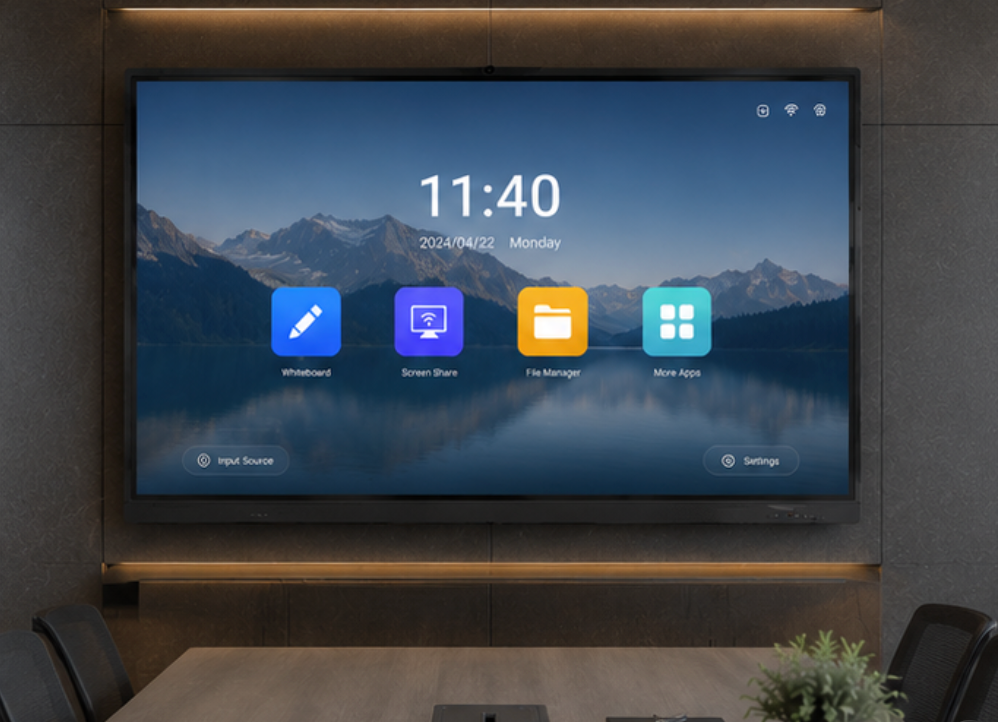
How Infrared Touch Works
Infrared touch, or IR, uses a frame of tiny LED emitters and receivers built into the bezel of the display. They create an invisible grid of light beams crisscrossing the screen surface. When your finger, a stylus, or any object breaks those beams, the board calculates exactly where the interruption happened and registers a touch.
The practical result is that anything works as a input device. Your finger. A plastic stylus. A capped marker. A pointer. A gloved hand in a hospital training room. Infrared does not care what touches it — it only cares that something broke the beam.
Most IR boards today support up to 40 touch points, which means multiple people can write on the screen at the same time without the board getting confused about whose finger is whose. This matters in a classroom where three kids are solving a problem together, or a meeting room where two people are annotating different parts of a document.
IR touch frames are also solid-state — no moving parts, nothing to wear out. The emitters and receivers are rated for the life of the display. There is no calibration drift over time, no sensitivity degradation, and no ghost touches from accumulated static. For a device mounted on a wall and used eight hours a day, that durability is the difference between a board you forget is there and a board that generates IT tickets.
How Capacitive Touch Works
Capacitive touch, or PCAP, is the technology in your smartphone. A transparent conductive layer sits on top of the display panel. When your finger touches the glass, it disturbs the electrostatic field at that point, and the board reads the location.
The experience is undeniably smoother. PCAP feels more responsive because there is no bezel frame — the touch sensor is laminated directly to the glass. Swiping and pinching feel like they do on a tablet. The surface can be completely flush with the bezel, which gives the board a cleaner, more premium look.
But that smoothness comes with real trade-offs. PCAP only responds to conductive objects — bare fingers or specialized capacitive styluses. A gloved hand does not register. A plastic marker does nothing. A wooden pointer is invisible to it. In a classroom where kids use whatever is nearby, or a factory training room where people wear gloves, capacitive touch becomes a frustration rather than a feature.
PCAP also costs more, typically adding a few hundred dollars to the price of a board. And because the touch layer is bonded to the glass, replacing a damaged capacitive panel is significantly more expensive than swapping an IR touch frame. For organizations managing dozens of boards across multiple rooms, that cost difference compounds.

Where Each Technology Makes Sense
The decision between infrared vs capacitive touch depends almost entirely on who is using the board and what they are doing with it. There is no universal right answer. There is only the right answer for your rooms.
Infrared is the better choice for most meeting rooms, classrooms, and training centers. It handles multiple users naturally, works with any object, costs less, and lasts longer. If your room runs whiteboard sessions, group annotations, or training exercises where multiple people need to write at once, infrared is what you want. It is also the safer bet for high-traffic environments — schools, public training rooms, hospital education centers — where the board gets used by dozens of different people every day, none of whom read the manual.
Capacitive makes sense for a very specific kind of room: an executive boardroom that hosts client meetings and needs to look premium. The flush glass surface, the smartphone-like responsiveness, the visual polish — all of that matters when you are making an impression. Capacitive also works well in design studios and creative workshops where people use fine-tip styluses for detailed sketching. But even in those rooms, the trade-off is real: only specialized styluses will work, and anyone who walks in with bare fingers and a plastic pen is out of luck.

How LonTon Approaches Touch Technology
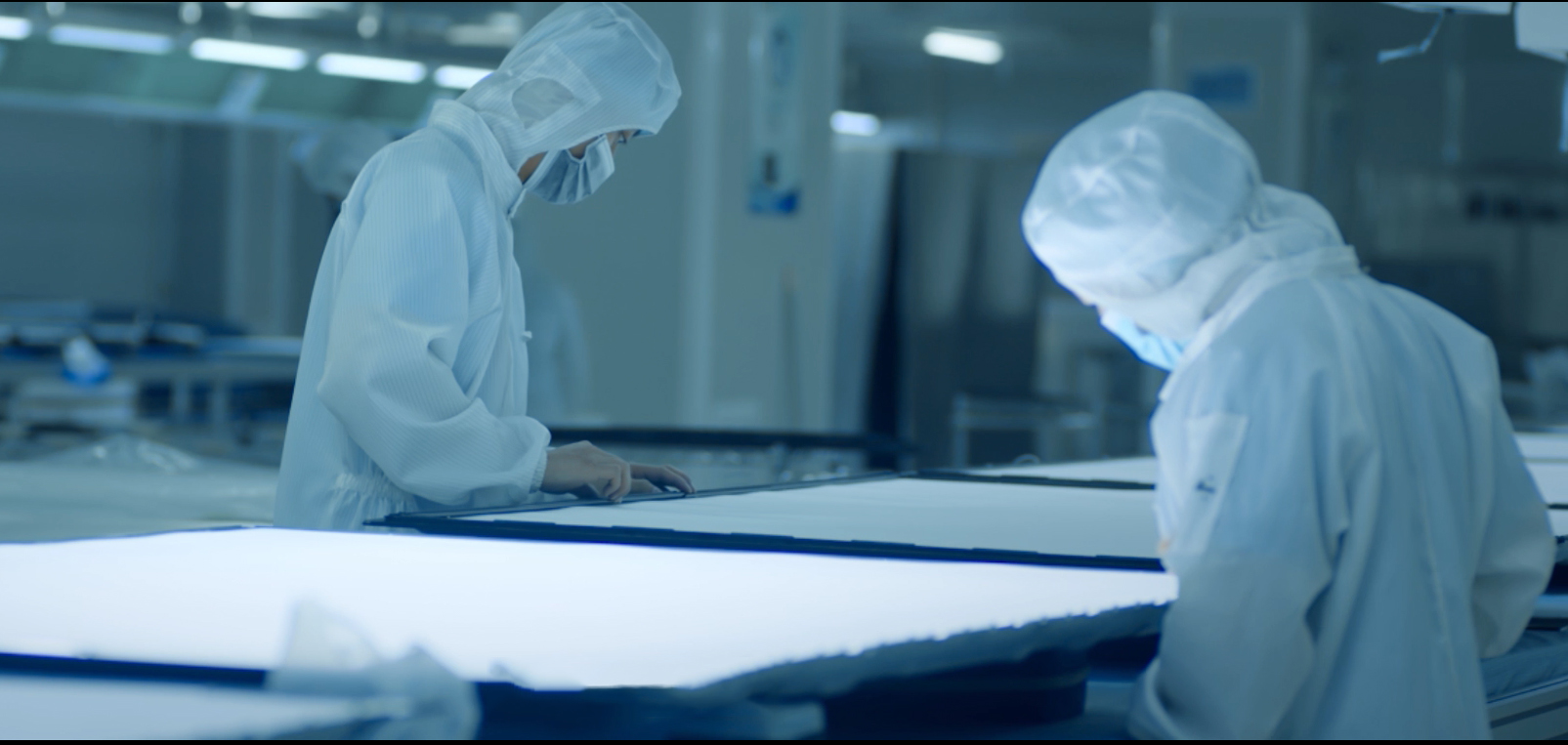
As a professional manufacturer, LonTon builds interactive flat panels with infrared touch as the standard — because for the rooms most customers are outfitting, IR delivers the best balance of durability, usability, and cost. Every board supports up to 40 touch points, handles any object as an input device, and carries a zero-maintenance touch frame that does not degrade over years of daily use.
For customers who need capacitive touch — typically executive boardrooms and design studios — LonTon offers PCAP as a custom configuration. The choice between infrared vs capacitive touch should be yours to make, not something a spec sheet decides for you. Tell us about your rooms and how people will use them, and we will help you figure out which technology fits.
A touchscreen that feels like a smartphone is tempting on paper. A touchscreen that still works perfectly after three years of kids, markers, coffee cups, and no calibration is the one you actually want on your wall. For most rooms, that is infrared. For the rooms where capacitive earns its premium, you will know it — and when you do, it ships with the same lead time and the same warranty as everything else LonTon makes.