
 English
Importing Interactive Flat Panels from China: A Shipping Guide
Buying interactive flat panels factory-direct from China can cut your landed cost by 30% or more versus a local distributor. But the savings only hold up if the logistics go smoothly. A delayed shipment, a damaged pallet or a customs hold at the port can eat the entire margin.
I've walked a lot of first-time importers through this. Here's the process in order, with the parts most people get wrong called out.
Step 1 — Lock your order details first
Before you think about shipping, get three things fixed: size and quantity, certification, and MOQ.
Size and quantity drive everything downstream — container type, freight class, and whether sea or air even makes sense. An 86-inch panel ships in a carton roughly 2.1 m × 1.3 m × 0.3 m. You fit far fewer of those in a container than you'd guess.
Certification is the other early decision. For the EU you'll want CE and RoHS at minimum, plus GPSR compliance for consumer-adjacent products. For North America, FCC. If the factory already holds ISO 9001/14001/45001, that paperwork speeds up a lot of downstream checks. If you're unsure what to ask for, we've covered which certifications an interactive flat panel should carry.
MOQ varies by factory. Some want a full container up front. Others — including us — are flexible on small trial orders, which is worth asking about if you're testing a new market. Here's a plain-English look at what MOQ actually means when buying an interactive flat panel.
Step 2 — Choose a shipping method
Sea freight is the default for interactive flat panels. It's the only realistic option for volume: a 20-foot container holds a workable number of units, and the per-unit cost is the lowest. The trade-off is time — 25 to 40 days from a Chinese port to Europe or North America, plus port handling.
Air freight only makes sense for samples, replacements or urgent pilot orders. It's fast — under a week — but the cost per unit is several times higher, and large-format panels get expensive fast.
DDP (Delivered Duty Paid) is worth asking about if you're a first-time importer. The factory or freight forwarder handles the freight, insurance and import duties to your door. You pay one landed price and don't have to learn the customs process on your first order.
Step 3 — Packaging: what a real factory does
Interactive flat panels are fragile. An 86-inch glass panel won't survive being knocked around a container in a thin carton. This is where factory quality shows up before the product is even turned on.
A proper factory packs each panel in a reinforced carton with molded foam corners and an anti-static bag, then straps the cartons to the pallet so nothing shifts in transit. We also use our own sheet-metal fabrication for mounting brackets, so the brackets arrive matched to the panel rather than as loose third-party parts.
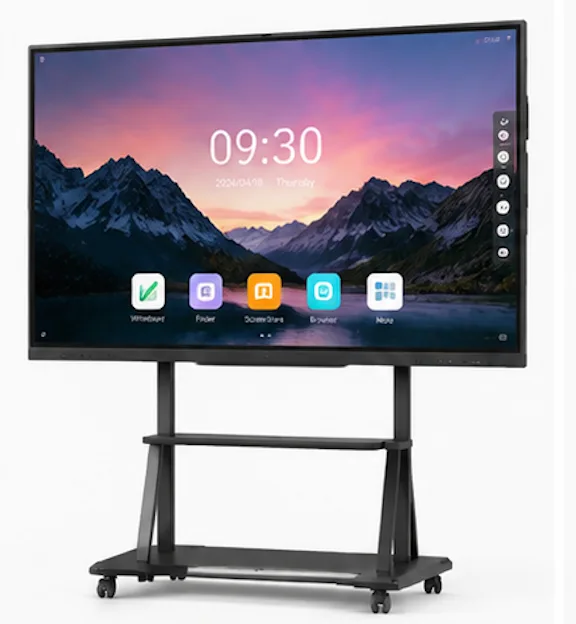
Ask the factory for photos of their packaging before you commit. If they can't show you how a panel is packed, that's a red flag.
Step 4 — Customs, duties and paperwork
Your freight forwarder will handle most of it, but you'll need these documents on the export side:
- Commercial invoice (with HS code for interactive flat panels — most classify under 8528 or 8471 depending on configuration)
- Packing list
- Bill of lading (sea) or air waybill (air)
- Certificate of origin (can reduce duty in some trade agreements)
- CE/FCC/RoHS certificates, if your market requires them
Confirm the HS code with your forwarder before the shipment leaves — reclassification at the destination port is where weeks of delay come from.
Step 5 — Inspect the shipment on arrival
When the container lands, inspect before you sign. Look for crushed cartons, broken pallets, or panels that have shifted. Photograph any damage on the spot — you'll need it for a freight claim.
Better still, arrange a pre-shipment inspection before the goods leave the factory. A third-party inspection firm, or a factory that's willing to walk you through a video inspection, catches most problems while they're still cheap to fix. This matters just as much as the panel specs — if you're new to buying direct, start with our checklist on sourcing OEM interactive flat panels from China.
Working with Lonton: factory-direct, fast lead time, flexible MOQ
This is the part where it helps to buy from the source. Lonton has been manufacturing interactive flat panels since 2005, out of a 100,000+ m² facility with 15 production lines and a 23,000 m² Class 10,000 cleanroom. We hold ISO 9001/14001/45001 plus CE, FCC and RoHS, so the certification paperwork is already in order before your order even ships.
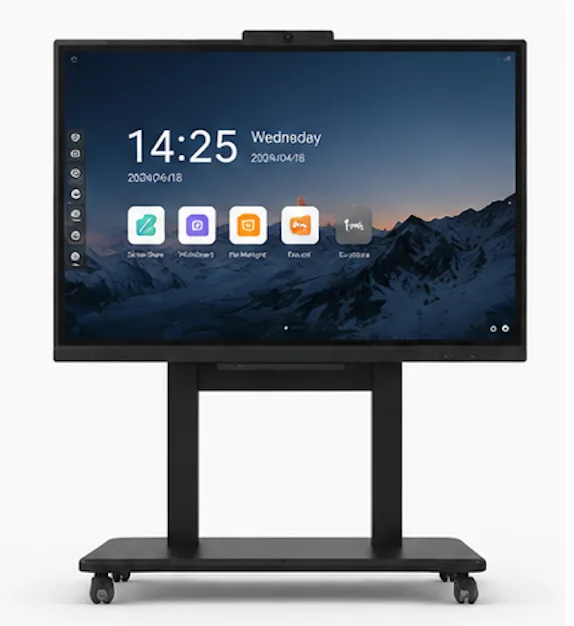
For importers, three things matter most:
- Factory-direct pricing — no distributor markup between you and the panel.
- Fast lead time — production runs on 15 lines, so we turn orders around quickly.
- Flexible MOQ — we support small trial orders, so you can test a market without committing to a full container.
If you're planning an import and want a clear landed-cost estimate — shipping method, packaging, documentation and timeline — contact us and we'll lay out the whole path for your market. You can also see the interactive flat panel range to start shortlisting sizes.
FAQ
How do I import interactive flat panels from China?
Lock your order details (size, quantity, MOQ, certification), pick a shipping method (sea for volume, air for samples), confirm packaging, prepare export documents, and inspect on arrival. A factory that offers DDP can handle the customs for you.
What is the MOQ for interactive flat panels?
It varies by factory. Some require a full container; others, including Lonton, support small trial orders so you can test a market first.
How long does sea freight take from China?
Typically 25–40 days from a Chinese port to Europe or North America, plus port handling and customs clearance.
What certifications do I need to import interactive flat panels?
CE and RoHS for the EU (plus GPSR where applicable), FCC for North America. ISO 9001/14001/45001 at the factory speeds up downstream checks.
Should I choose DDP or handle customs myself?
For a first-time import, DDP is usually easier — the factory or forwarder handles freight, insurance and duties to your door, and you pay one landed price.