
 English
Huddle Room vs Boardroom: Which Smart Board Size (2026)
A huddle room vs boardroom smart board decision starts with a tape measure but ends with understanding how each room is actually used. The two spaces serve different meeting types, and the display that works in one will frustrate in the other.
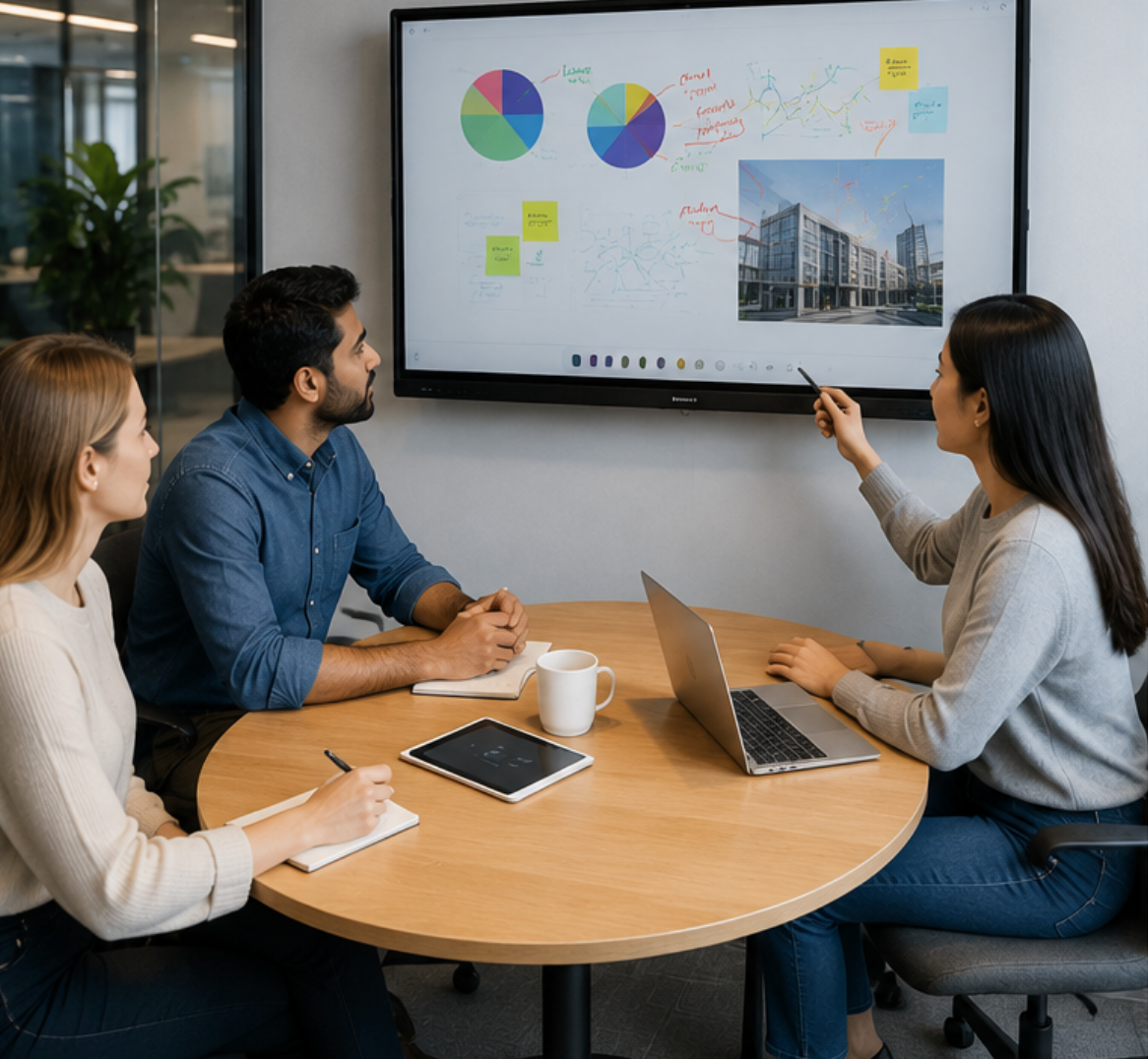
A huddle room is small — typically 6 by 8 feet to 10 by 12 feet — seating three to six people around a small table or standing at a high-top. Meetings are spontaneous, short, and often involve one or two remote participants dialing in. The smart board in a huddle room needs to be compact enough to fit but large enough for everyone to read. A 55-inch or 65-inch panel is the sweet spot. Anything larger overwhelms the wall, and participants sitting three feet from the screen get a front-row cinema experience they did not ask for.
Because huddle room meetings are quick and informal, the panel should be instant-on. Waiting for Windows to boot kills the spontaneity that defines huddle room culture. An Android-based panel that powers up in seconds, with a built-in camera and microphone for one-tap video calls, matches the room's rhythm. Wireless screen sharing through EShare, pre-installed on LonTon panels, handles the guest presenter who walks in with a laptop and wants to share a slide in under a minute.
A boardroom is the opposite. Large — 15 by 20 feet or bigger — with a long table seating 10 to 20 people, formal meetings, and often a mix of in-room and remote executives. The smart board needs to be big enough for the person at the far end of the table to read small text. An 86-inch panel is the minimum for most boardrooms, and some organizations go larger or pair multiple panels.
Audio matters more in a boardroom because the distance between participants and the panel's built-in microphone can exceed 15 feet. The built-in mic on a quality IFP handles up to 10 to 12 feet well; beyond that, external ceiling microphones or a dedicated conference speakerphone improves the remote experience. Boardrooms also benefit from the OPS Windows module, since formal presentations often rely on desktop PowerPoint features and corporate templates that Android mobile apps do not fully replicate.

The huddle room vs boardroom smart board difference is not just size. It is boot time, audio expectations, and how formal the room's culture is. As a professional manufacturer, LonTon offers interactive flat panels from 55 to 98 inches with configurable options across both form factors — instant-on Android for huddle rooms, and the flexibility to add OPS Windows for boardrooms that need it. Match the panel to the room and the huddle room vs boardroom smart board question takes care of itself.