
 English
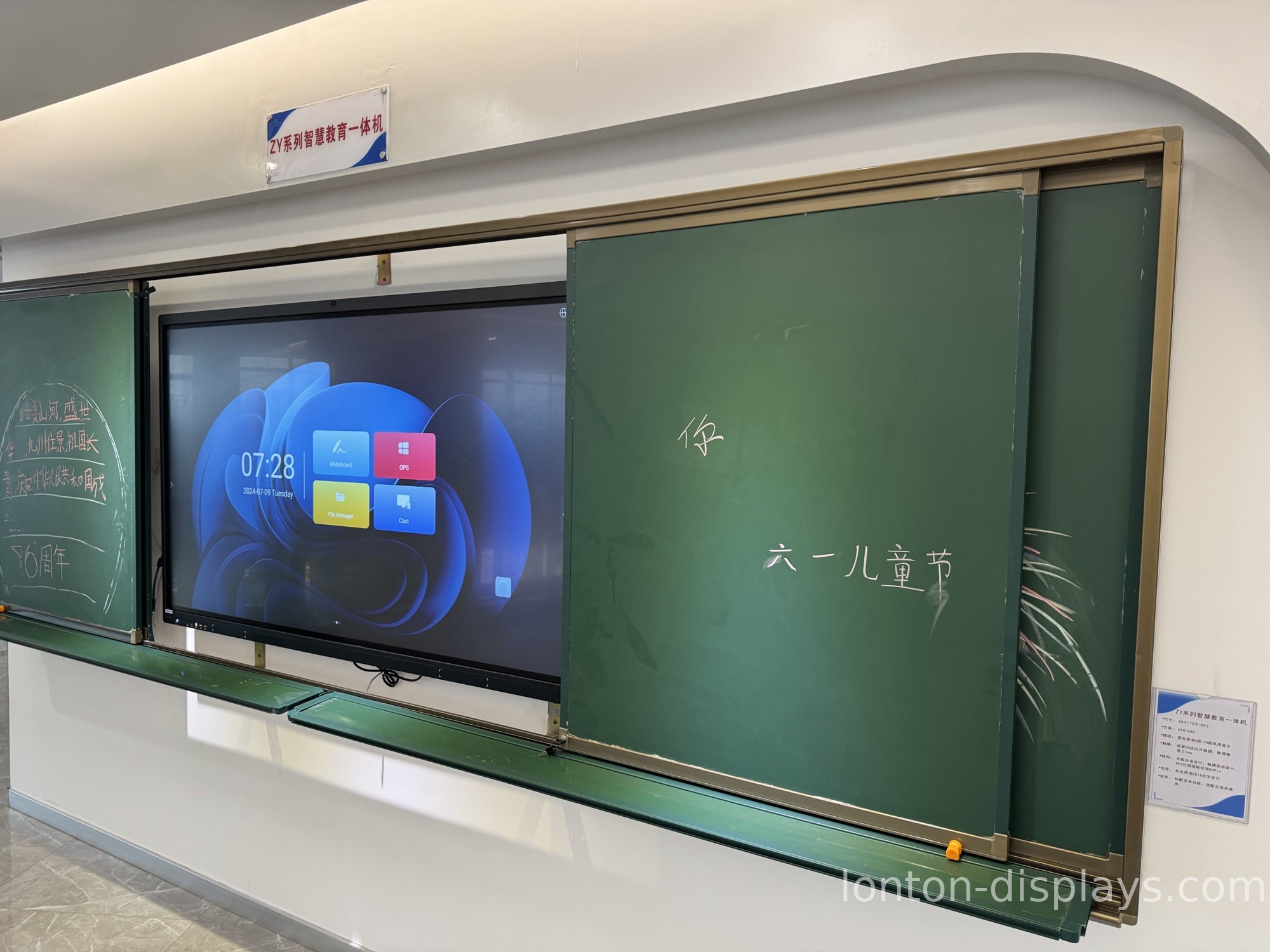
A school board signs off on a purchase, and the question always comes up: "Is this actually going to help students learn, or are we buying a big expensive toy?" It's a fair question. The honest answer is that an interactive flat panel doesn't teach anyone anything by itself — but it does several specific things that make teaching and learning measurably easier. Here's what the panel actually changes in a classroom, and where it doesn't.
Engagement: Getting More Students to the Board
The most obvious change is who's willing to come up and work. On a traditional whiteboard, one student writes while thirty watch. With an interactive flat panel, the same activity feels different — students want to touch the screen, drag things, solve the problem themselves. It's a small shift, but engagement is the first domino. A student who's engaged is a student who's actually paying attention, and attention is where learning starts.
This isn't just a feeling. When a teacher can pull up a video, a map, a diagram, and write over it in the same minute, the lesson stops being a sequence of separate tools and becomes one continuous flow. That flow is what keeps a room of students on task.
Immediate Feedback: Correcting in the Moment
Learning happens fastest when a mistake gets corrected right away, not three days later when papers come back. An interactive flat panel makes in-the-moment correction normal. A student solves a math problem on the board, the class sees it, and the teacher marks it up live. That loop — try, see, correct, try again — is one of the most reliable ways people learn, and the panel shortens it to seconds.
Collaboration: More Than One Student at a Time
Group work on a traditional board is awkward — one person holds the marker, everyone else waits. A panel with 40-point touch changes that. Four or five students can write on the screen at the same time, so a group task becomes a genuinely shared activity instead of a turn-taking exercise. In the younger grades especially, this is where a lot of the "engagement" actually comes from.
What the Research Actually Says
Here's where I'll be honest, because the vendors who oversell this stuff do everyone a disservice. The research on interactive displays shows consistent gains in engagement and participation, and teachers reliably report better attention and easier lesson delivery. What it does not show is a magic score bump. Test scores come from good teaching and good curriculum — the panel is a tool that makes those easier to deliver, not a replacement for them. If you're still on the fence about whether it's worth the spend, this piece on whether interactive whiteboards are worth the money walks through the same question.
The schools that get the most out of these panels are the ones that pair them with a plan: which lessons use the board, which activities get students up to it, and how teachers are supported. Buy the panel, skip the plan, and you've bought an expensive TV.
Where the Hardware Actually Matters
Because the panel only helps when it disappears into the lesson, the hardware quality matters more than people expect. If the touch lags or misses, a student hesitates and the moment is gone. If the screen is too dim for the back row, half the class checks out. If it takes a minute to switch inputs, the flow breaks.
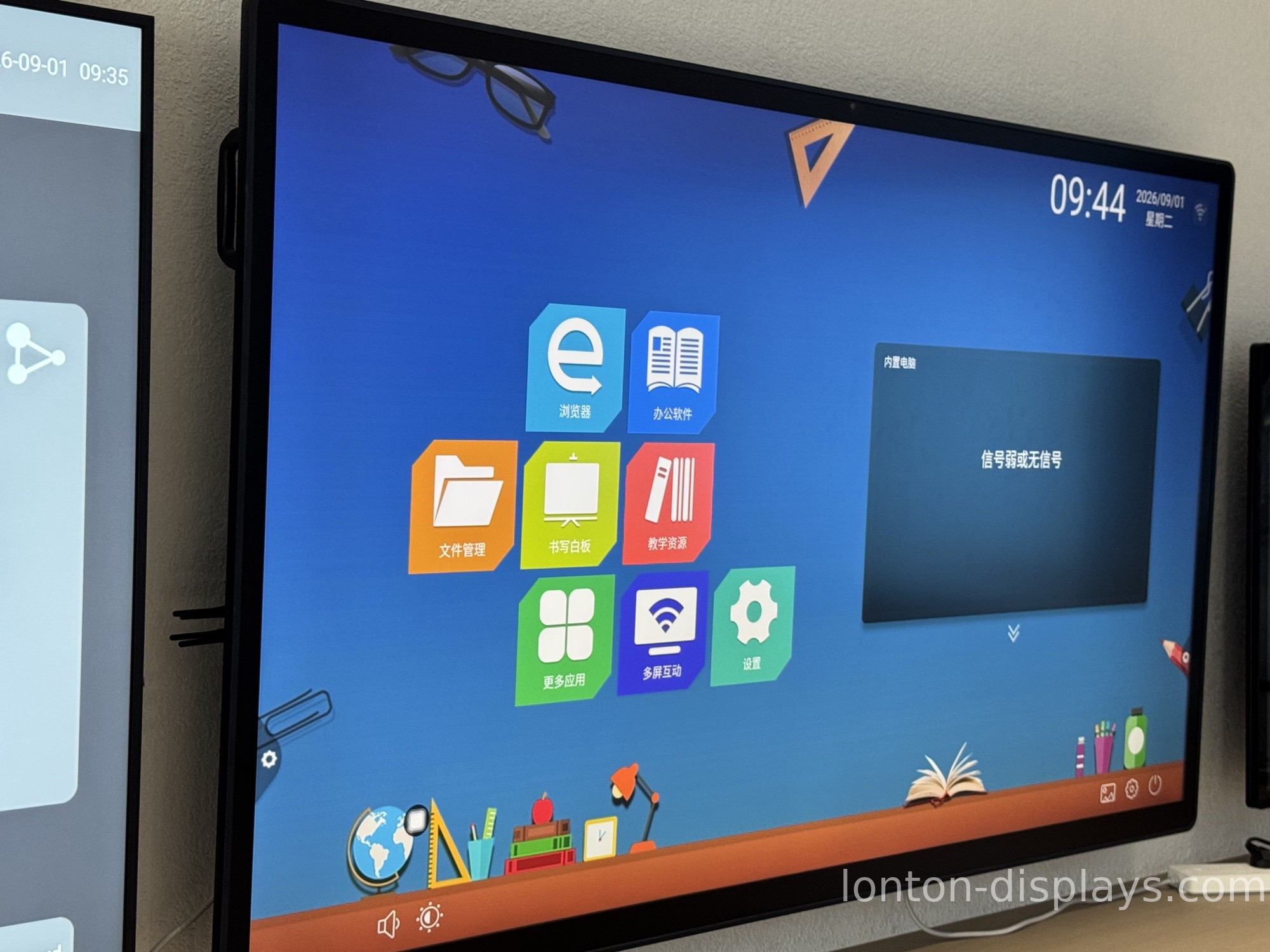
This is what we optimize for at Lonton. Our interactive flat panels use 40-point infrared touch with under 10 ms response and ±1 mm accuracy, so writing feels like writing on a whiteboard, not fighting a screen. The 4K display at 350 cd/m² stays readable from the back of the room without glare, and BOE and CSOT panels hold up over years of daily classroom use. When the board just works, the teacher stops thinking about the technology and gets back to teaching — which is exactly the point.
The Bottom Line
An interactive flat panel won't teach your students for you, and anyone who says otherwise is selling something. What it will do is make the things that already work — engagement, immediate feedback, real collaboration — easier and more frequent. In a classroom that already has good teaching, that's a meaningful upgrade. In one that doesn't, no screen can fix the fundamentals.
If you're equipping classrooms and want to make sure the panels actually get used — and used well — we can help you pick the right sizes and put together a rollout plan, not just ship you boxes. Take a look at our interactive flat panel range, then tell us how many classrooms you're equipping and what you teach, and we'll send you a factory-direct quote.
FAQ
Do interactive flat panels actually improve test scores?
Not by themselves. Research shows consistent gains in engagement and participation, and teachers report better attention and easier delivery. But test scores track good teaching and curriculum — the panel makes those easier to deliver, it doesn't replace them.
How does an interactive flat panel increase student engagement?
It makes lessons interactive and multi-sensory — students come up to write, drag, and solve on the screen instead of watching one person use a whiteboard. With 40-point touch, several students can work at once, which turns individual tasks into shared ones.
Is an interactive flat panel worth it for a small school?
It depends on how it's used. If it replaces a projector and a whiteboard and gets used across subjects every day, the cost per lesson drops fast. The key is pairing it with a simple training and rollout plan so it doesn't sit unused.
What should I look for in hardware so the panel doesn't distract from teaching?
Fast, accurate touch (40-point infrared with low latency), a bright 4K display that stays readable without glare, and a familiar interface like Android 15 that boots straight to the whiteboard. If the board just works, teachers stop thinking about the technology.