
 English
Why Interactive Displays Are More Affordable Than You Think
Most people who walk into a meeting room and see an interactive flat panel on the wall assume it cost the company a fortune. That assumption made sense in 2019. It does not make sense anymore.
The price of a good 65-inch interactive display has dropped to roughly what a high-end commercial TV without touch capability cost five years ago. Not because anyone cut corners. Because the entire industry grew up.
What Changed
In 2018 and 2019, interactive flat panels were still a niche product. 4K panels were expensive to manufacture. Infrared touch frames were a specialty component with a specialty price tag. The Android modules that power the built-in operating system came from a small number of suppliers who charged what they wanted. A handful of established brands controlled the supply chain and priced their products for early adopters with deep budgets.
What happened next was the same thing that happens in every hardware category when it matures: the supply base caught up.
The panel manufacturing industry in Shenzhen and the Pearl River Delta scaled up to produce 4K UHD panels at volumes nobody predicted. Infrared touch frame production became a commodity — the technology is well-understood, the components are standard, and there are now dozens of qualified manufacturers competing on quality and price instead of a handful. Android system-on-chip modules dropped in cost by more than half as the same chips found their way into smart TVs, digital signage, and a dozen other categories.
The net effect is that a 65-inch interactive flat panel with 20-plus-point IR touch, 4K resolution, and built-in Android now costs what a non-interactive commercial display cost in 2020. The product got better. The price just followed the supply curve down.
The Price Spread Confuses Everyone
If you search for an interactive flat panel right now, you will see prices ranging from about $700 to well over $5,000 for what looks like the same size screen. That spread is real, but it does not mean the $700 board is junk or the $5,000 board is a scam. It means you are looking at products built for completely different use cases and sold through completely different channels.
Entry-level boards in the $500 to $900 range are built for light use. A small huddle room that runs a few hours a week. A classroom stretching a tight budget. They typically come with 10-point touch, basic speakers, a glossy screen that washes out near windows, and a one-year warranty. They work, but they are not designed for a room that runs meetings eight hours a day, five days a week.
The mid-range tier — roughly $1,200 to $2,200 for a 65-inch board — is where most schools, offices, and training centers should be looking. You get 20-point-plus infrared touch that handles multiple people writing at once, 400 to 450 nits of brightness that actually works in rooms with natural light, built-in Android with wireless screen mirroring, an OPS slot that lets you upgrade the computing module later without replacing the whole board, and a three-year warranty. This tier is where the price-to-value ratio peaks, and it is also where manufacturers like LonTon, a professional manufacturer of interactive flat panels, position their products.
At the premium end above $3,000, you are paying for very specific needs. Capacitive touch instead of infrared, 500-plus nits of brightness for sun-drenched boardrooms, integrated 48-megapixel cameras, and five-year enterprise support contracts. That makes sense for an executive boardroom hosting client meetings every day. It is overkill for a training room used twice a week.
The mistake most buyers make is wandering into the premium tier, seeing a $4,000 price tag, and concluding the whole category is out of reach. The value lives in the middle, and that middle has never been more accessible.

What You Are Not Buying Separately Anymore
Another reason interactive displays feel more affordable is that a lot of costs that used to be separate line items are now part of the board itself.
A few years ago, making a meeting room interactive meant buying a commercial display, a separate touch overlay, an external PC to run the whiteboarding software, a wireless casting dongle, and a speaker system that did not sound like a laptop from a decade ago. Each item was its own purchase, its own cable, and its own potential point of failure.
A modern all-in-one interactive flat panel rolls all of that into a single device. The Android OS handles whiteboarding, wireless casting, and app-based video conferencing without an external PC. The speakers are designed as part of the chassis and tuned for the room sizes the board is meant for. The touch frame is integrated at the factory, not bolted on after the fact. One power cable. One wall mount. One device to manage.
When you compare the all-in cost of a modern interactive flat panel to the piece-by-piece approach from five years ago, you are often spending less today for a noticeably better experience.

Why Some Brands Cost Less Without Cutting Corners
There is another factor that does not get discussed enough in buying guides: how far the brand is from the factory floor.
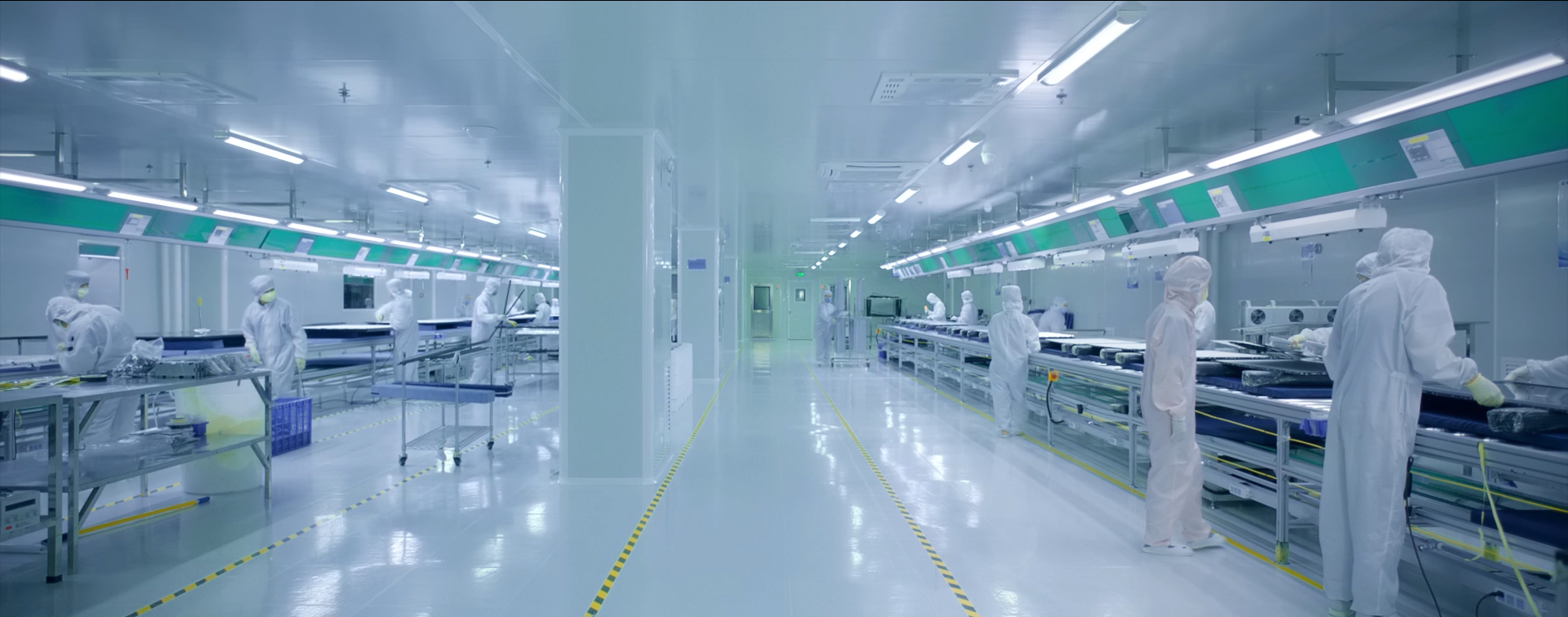
Some of the most expensive interactive displays on the market come from companies that do not manufacture anything themselves. They buy from the same factories in Shenzhen that produce mid-range boards for other brands, add their logo, build a marketing story, and charge a brand premium that can double the price. The hardware inside is often the same panel, the same touch frame, and the same Android module you would find in a board selling for 40 percent less.
Professional manufacturers like LonTon, who have been producing interactive flat panels since 2005, do not carry that middleman markup. Because design, assembly, and quality control happen under one roof, there is no third party adding a margin on top of a margin. A LonTon 65-inch board with 20-plus-point IR touch, 400-nit brightness, built-in Android, an OPS slot, and a three-year warranty lands around $1,200 to $1,800 — the same core specs you would pay significantly more for from a brand that outsources production and passes the cost along.
None of this means the big brands make bad products. It just means price and quality do not always move together as neatly as buyers expect. Sometimes you are paying for the product. Sometimes you are paying for the logo.
What to Budget
For a standard meeting room or classroom that needs a board built for daily use, plan on roughly $1,200 to $2,200 for a 65-inch unit, depending on whether you need a built-in camera and microphone array. A 75-inch version adds a few hundred dollars. A 55-inch board for a smaller space lands lower.
If your budget is tighter, a 55-inch entry-level board in the $500 to $900 range works for light-use spaces — a small huddle room running a few hours a week. Just go in knowing what you are trading off: basic audio, a glossy screen that struggles in bright rooms, and a shorter warranty.
And if you are buying ten or more units for a school or a corporate rollout, talk to manufacturers directly. Volume pricing at five-plus or ten-plus units brings the per-unit cost down meaningfully. That same 65-inch mid-range board starts behaving like an entry-level price when you are outfitting a building instead of a single room.
If you looked at interactive flat panel pricing a few years ago and closed the tab, it is worth opening it again. The numbers have shifted more than most people realize. Better supply chains, smarter integration, and more direct paths from factory to meeting room — all of it works in the buyer's favor now.
Trying to work out what makes sense for your rooms and your budget? We have been helping schools, offices, and training centers find the right setup since 2005. Tell us about your space and how you plan to use it, and we will help you figure out what you actually need — and what you can skip.
[Contact LonTon — Let's Talk About Your Setup]